
Cost to Install an Elevator in an Existing Home
To install an elevator in an existing home you need room for the lift, a floor opening or a shaft, power, and in many states a permit and an inspection.
Installed Price by Kind of Lift
| Kind of lift | Lift installed, 2 floors | All in, house already built | Shaft or pit | Floor space | Takes a wheelchair |
|---|---|---|---|---|---|
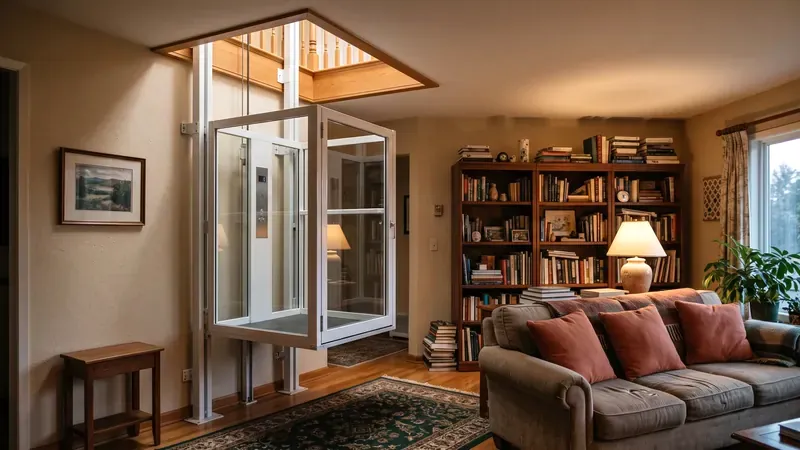 Shaftless home elevator | $20,000–$35,000 | $21,500–$41,000 | No shaft or pit | 30 to 60 in across | Some models |
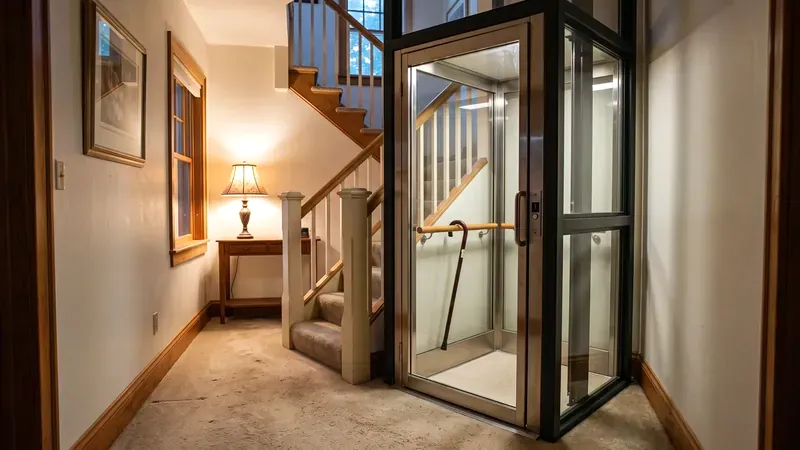 Small one person lift | $25,000–$30,000 | $26,500–$36,000 | No shaft or pit | 30 to 41 in across | No |
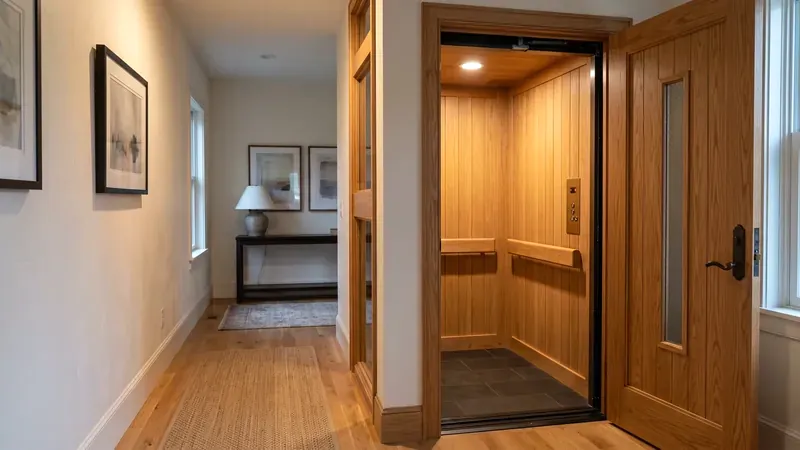 Hydraulic elevator | $25,000–$56,500 | $33,500–$92,500 | Built shaft and a small pit | 50 to 56 in across | Some models |
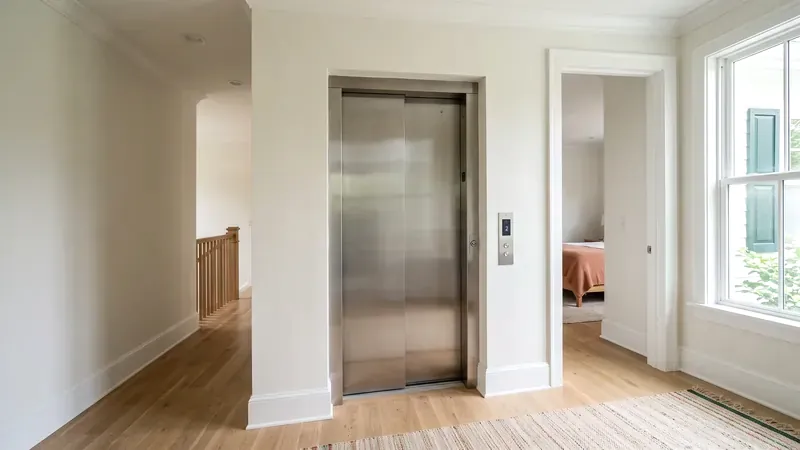 Traction or cable elevator | $27,000–$50,000 | $35,500–$86,000 | Built shaft and a shallow pit | Shaft sized to the cab | Some models |
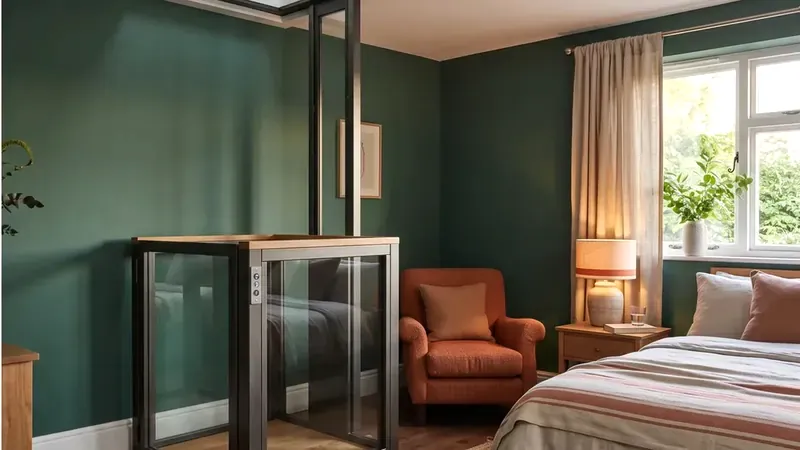 Through floor lift | $30,000–$60,000 | $31,500–$66,000 | No shaft, an opening in the ceiling | 30 to 60 in across | Some models |
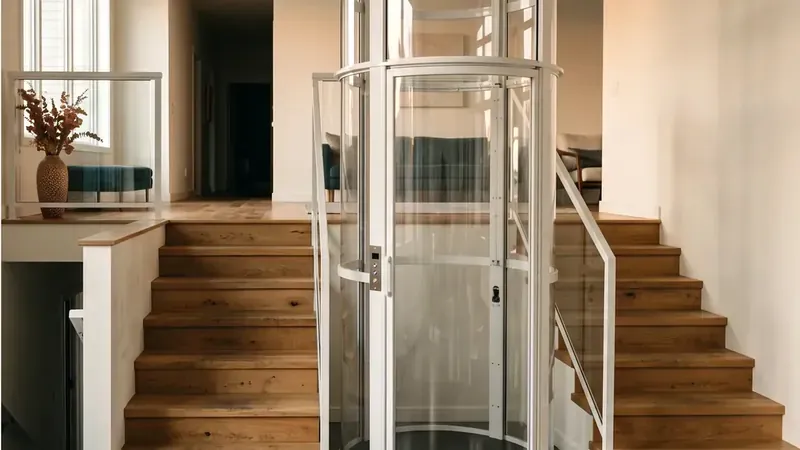 Pneumatic vacuum elevator | $35,000–$60,000 | $36,500–$66,000 | No shaft or pit | 30 to 53 in across | Some models |
- Most published quotes, 2 floors
- $30,000–$50,000
- Building a shaft into the house
- +$5,000–$25,000
- Fitting time
- 4 to 7 days on site
Most people pay about $30,000 to $50,000 to install an elevator in an existing home. A shaftless lift, which rides up without a shaft (the enclosed column around a lift), often costs less, closer to $20,000 to $35,000.
If your home needs a new shaft, construction work may cost $5,000 to $25,000, so ask whether that work is already included in the installed price you're quoted.
These ranges come from published figures we compared side by side. What you actually pay will hinge on which model you pick, how many floors you have, and what kind of work your house needs.
What Raises the Price in an Existing Home?
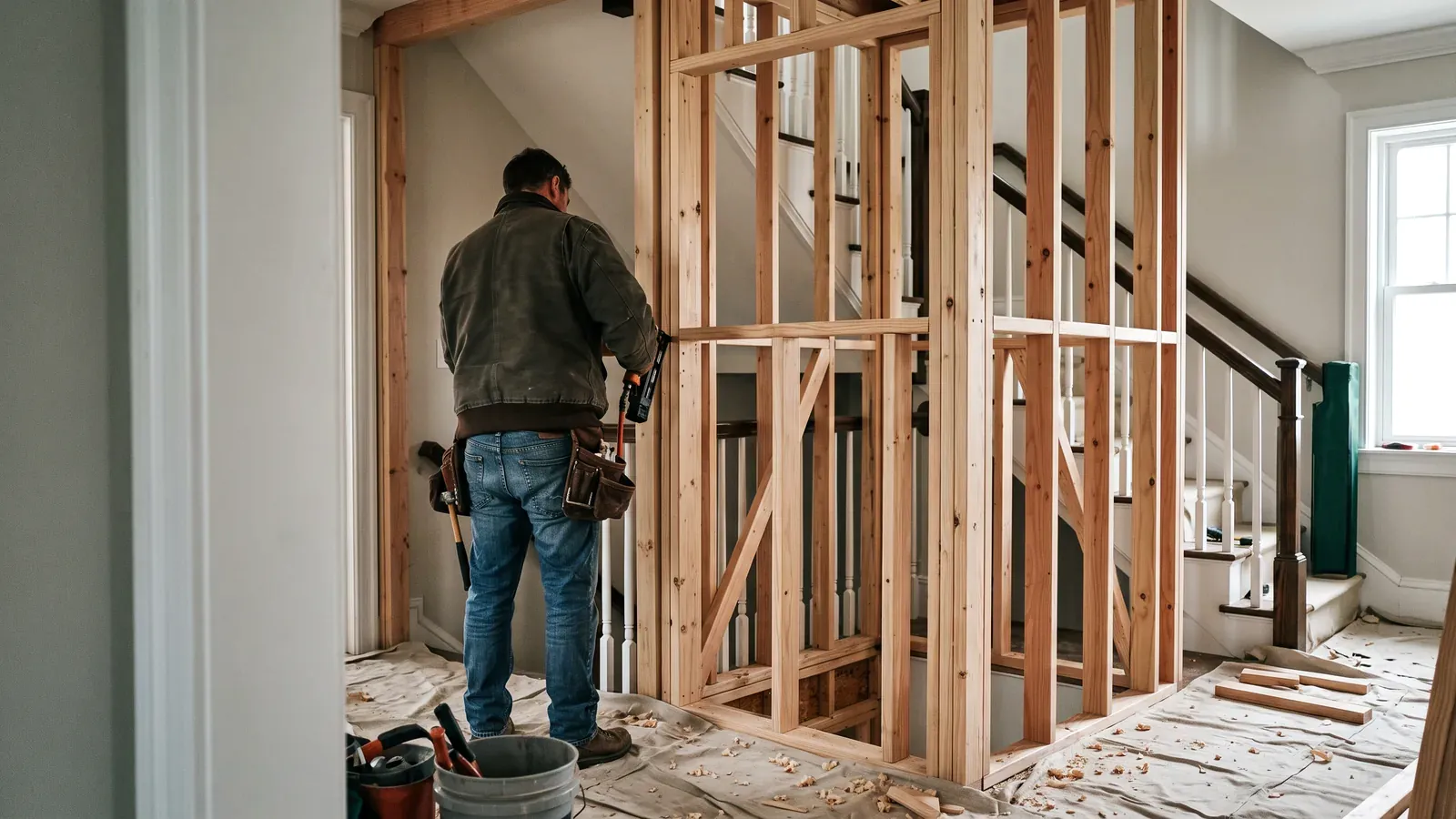
In an existing house, site preparation and structural changes can add to the cost. Getting the site ready can cost anywhere from $500 to $15,000, based on the home, per Angi. Structural changes can run $5,000 to $25,000, according to one Colorado company, Willow, and your own cost may differ.
Electrical work is its own line item. A dedicated circuit costs $250 to $900, and upgrading the panel runs $1,300 to $4,000, per HomeGuide. Some lifts run on air pressure (pneumatic ones), and if your ceilings are too low for one, fixing that can add $1,000 to $5,000.
Design and engineering may add to the cost, so check whether they are included in each quote. Willow puts those fees at $3,000 to $8,000, and hiring a structural engineer costs $100 to $220 an hour.
Installation Time
Once the structure of the house is ready, the installation itself usually takes four to seven days, according to HomeGuide. The prep beforehand takes longer: four to five weeks when a traditional shaft is involved, and one to three weeks when there is no shaft.
Cambridge Elevating, one manufacturer, says delivery takes eight to 10 weeks after the drawings are approved.
Permits and Inspections
Permit fees vary a lot. Permits usually cost between $200 and $3,000, and each inspection adds about $150 to $700, according to HomeGuide. Permit and inspection requirements depend on where you live.
Your local building department can tell you which permits and inspections your home needs, so it's worth calling them early on.
Added Costs in a House Already Built
| Piece of the work | Usual cost | Source |
|---|---|---|
| Floor opening for a shaftless lift | $1,000–$3,000 | HomeGuide |
| Structural changes for the shaft | $5,000–$25,000 | Willow |
| Design and engineering for the shaft | $3,000–$8,000 | Willow |
| A circuit of its own | $250–$900 | HomeGuide |
| Permit | $300–$2,000 | HomeGuide |
| Panel upgrade, if the panel is full | $1,300–$4,000 | HomeGuide |
| Each extra inspection visit | $150–$700 | HomeGuide |
| Crew labor and project management | $8,000–$20,000 | Willow |
Not every house needs every line, and some installed prices already cover part of this work, so ask what each quote includes.
Running Costs and Help Paying
- Yearly service
- $300–$760
- Power
- About $0.10 a day
- Repairs to set aside
- $500–$1,500 a year
Sources: Angi (service), RetirementLiving (power, about 1 kWh a day), Willow (repairs, a Colorado estimate). A repair visit is billed at $75 to $100 an hour (HomeAdvisor).
- VA Specially Adapted Housing grant
Up to $126,526 (FY 2026) for veterans with a qualifying service-connected disability.
- USDA Section 504 repair loan or grant
A loan up to $40,000, or a grant up to $10,000 at age 62 or older, for very-low-income homeowners in rural areas.
- Medical expense tax deduction
The part of the cost that does not raise your home's value can count as a medical expense.
From First Visit to First Ride
1
Home visit and drawings
A dealer measures the house and draws the lift in
2
Building work
4 to 5 weeks with a shaft, 1 to 3 weeks without (HomeGuide)
3
Making and delivery
8 to 10 weeks after the drawings are approved (Cambridge Elevating)
4
Fitting and inspection
4 to 7 days on site once the opening is ready (HomeGuide)
Residential Elevator Permits and Inspections by State
Whether the state itself permits and inspects an elevator in a private home, and whether the installer needs a state elevator licence for that work. Each state links to its own page with the rule and its source.
Open the table for all 50 states and D.C.
| State | State permit or inspection | Licensed installer for home work | State office |
|---|---|---|---|
| Alabama | Yes: state permit, licensed third-party inspector | Yes: a licensed elevator contractor | Alabama office |
| Alaska | No: local rules govern a home lift | No elevator licence from the state | Alaska office |
| Arizona | Yes: state permit, then an inspection every year | Yes: an R-12 licence for elevator contractors | Arizona office |
| Arkansas | No: no state permit or inspection for a home | Yes: licensed mechanic or accessibility technician | Arkansas office |
| California | No: handled by the local building department | C-11 licence for elevator contractors | California office |
| Colorado | No: local building departments handle it | No: houses are exempt from state rules | Colorado office |
| Connecticut | Yes: plan approval, first inspection only | Yes: licensed elevator contractor | Connecticut office |
| Delaware | No: local building department only | Yes: state licensed elevator mechanic | Delaware office |
| Florida | No: local building department only | No: home work is exempt | Florida office |
| Georgia | Partly: permit and first inspection only | Yes: residential elevator certification | Georgia office |
| Hawaii | No: no state permit or inspection for a home | Yes: licensed elevator mechanic | Hawaii office |
| Idaho | No: a local building permit is all | No elevator licence, but an electrical licence is required | Idaho office |
| Illinois | No: no state permit or inspection for a home | Licensed contractor; home jobs may be exempt | Illinois office |
| Indiana | No: no state permit or inspection for a home | No: home work is exempt | Indiana office |
| Iowa | No: no state permit or inspection for a home | No state elevator licence | Iowa office |
| Kansas | No: no state permit or inspection for a home | No: home work is exempt | Kansas office |
| Kentucky | Yes: state permit and inspections | Yes: licensed elevator contractor | Kentucky office |
| Louisiana | No: homes exempt, local permit only | No: home work is exempt | Louisiana office |
| Maine | No: no state permit or inspection for a home | No: home work is exempt | Maine office |
| Maryland | Yes: register the lift, then one final inspection | Yes: an elevator or lift mechanic licence | Maryland office |
| Massachusetts | Partly: a permit and an acceptance test; no yearly inspection | Yes: a mechanic licensed by the state | Massachusetts office |
| Michigan | Yes: a permit and a final inspection, nothing more | Yes: a licensed elevator contractor must do it | Michigan office |
| Minnesota | Yes: state permit and inspection | Yes: limited residential licence or higher | Minnesota office |
| Mississippi | No: no state permit or inspection for a home | No: home work is exempt | Mississippi office |
| Missouri | No: no state permit or inspection for a home | No: home work is exempt | Missouri office |
| Montana | No: no state permit or inspection for a home | No: home elevators are outside the licence law | Montana office |
| Nebraska | Partly: counties over 100,000, installation inspection only | Yes, in counties over 100,000 | Nebraska office |
| Nevada | Yes: state inspections, one of them before a sale | Yes: a state certificate as elevator mechanic | Nevada office |
| New Hampshire | Partly: elevators may need approval; lifts exempt | Licensed mechanic for elevators, not chairlifts | New Hampshire office |
| New Jersey | Partly: permit and initial inspection only | Yes: licensed elevator mechanic | New Jersey office |
| New Mexico | No: local building permit only | No: home work is exempt | New Mexico office |
| New York | No: handled by the local building department | Yes: a hired installer needs a state licence | New York office |
| North Carolina | No: local building department handles it | No state elevator licence | North Carolina office |
| North Dakota | No: no state permit or inspection for a home | No: home work is exempt | North Dakota office |
| Ohio | Partly: a permit, but no periodic inspections | No: work only on homes is exempt | Ohio office |
| Oklahoma | Yes: the state inspects new installs | Yes: new installs need a licensed contractor | Oklahoma office |
| Oregon | Partly: state permit and install inspection only | No: home work is exempt | Oregon office |
| Pennsylvania | No: local building permit instead | No state elevator licence | Pennsylvania office |
| Rhode Island | Partly: a state acceptance inspection, no yearly checks after | Elevator companies need a state licence | Rhode Island office |
| South Carolina | No: no state permit or inspection for a home | No state elevator licence | South Carolina office |
| South Dakota | No: local building department only | No state elevator licence | South Dakota office |
| Tennessee | No: local building permit only | No state elevator licence | Tennessee office |
| Texas | Partly: a single inspection; no state permit | No: installs in homes are exempt | Texas office |
| Utah | No: no state permit or inspection for a home | No: home work is exempt | Utah office |
| Vermont | Partly: exempt unless rented or a condo | Not needed unless rented or condo | Vermont office |
| Virginia | No: local permit only, no yearly inspection | Yes: state accessibility mechanic certification | Virginia office |
| Washington | Yes: permit and one-time inspection | Yes: limited residential elevator licence | Washington office |
| Washington, D.C. | Partly: permit and final inspection only | Yes: licensed elevator contractor | Washington, D.C. office |
| West Virginia | Partly: acceptance test and sale inspection only | Limited accessibility technician licence | West Virginia office |
| Wisconsin | Partly: permit and inspection at install only | Yes: licensed elevator contractor | Wisconsin office |
| Wyoming | No: local building department only | No: electrical licence for wiring only | Wyoming office |
Download: residential-elevator-rules-by-state.csv (each state's rule, citation and source link).
Questions People Often Ask
Can I add an elevator to the house I already have?
Yes, it can. Many homeowners choose a shaftless lift, which needs no built shaft and usually costs $20,000 to $35,000 installed. A through-floor lift, which rises through an opening cut in the floor, is another option at about $30,000 to $60,000 installed.
What kind of budget should I set aside for a home elevator?
Published installed-price ranges suggest $30,000 to $50,000 as a starting point, but work needed to fit a lift into an existing home can change your quote. Smaller lifts often cost $25,000 to $30,000, and glass models run $50,000 to $100,000.
Talk to a Lift Installer Near You
One call gets you a local home elevator dealer who can measure your house and put a written price on it.