
Home Elevator Cost in Kansas
- Typical installed price, 2 floors (US)
- $30,000–$50,000
- Our estimate for Kansas, 2 floors
- $28,000–$45,000
- US range, cheapest to dearest kind
- $20,000–$60,000
- State permit in Kansas
- No: no state permit or inspection for a home
: Your installed price depends on the lift and the work your house needs.
Installed Price by Kind of Lift
Installed for two floors. Our Kansas estimate moves each US price by the same share as the state's two-floor estimate (elevator installers' pay against the US).
| Kind of lift | Our estimate in Kansas, 2 floors |
|---|---|
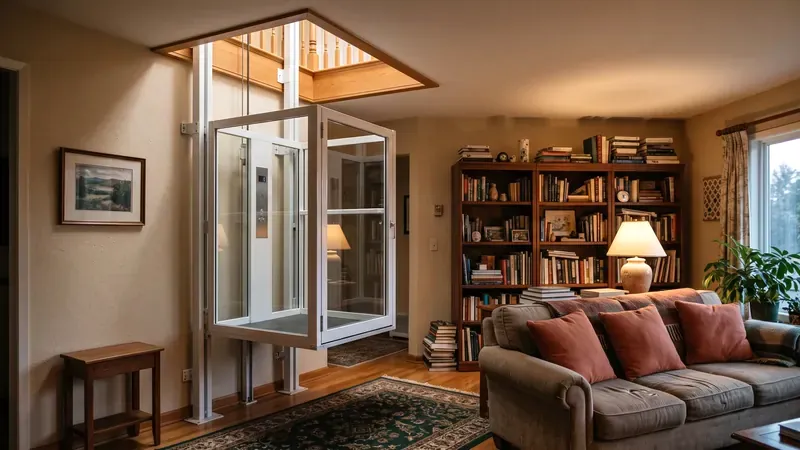 Shaftless home elevator | $19,000–$32,000 |
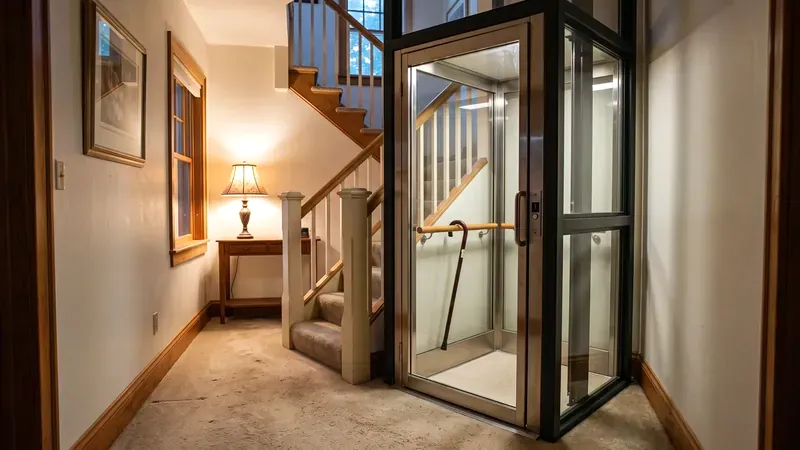 Small one person lift | $23,000–$27,000 |
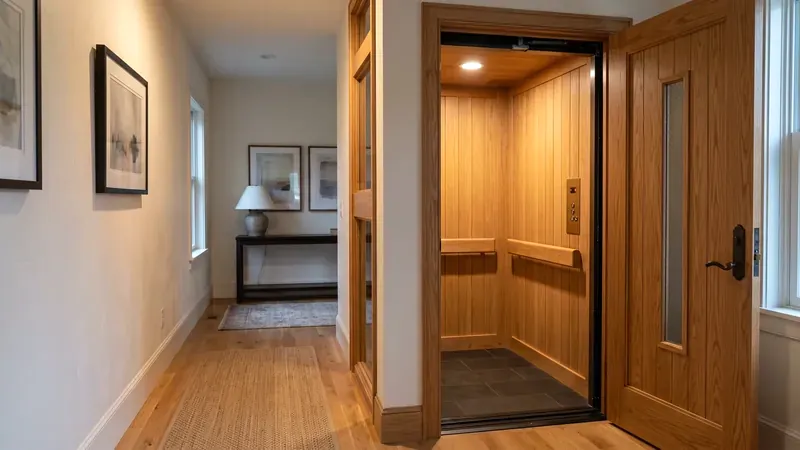 Hydraulic elevator | $23,000–$51,000 |
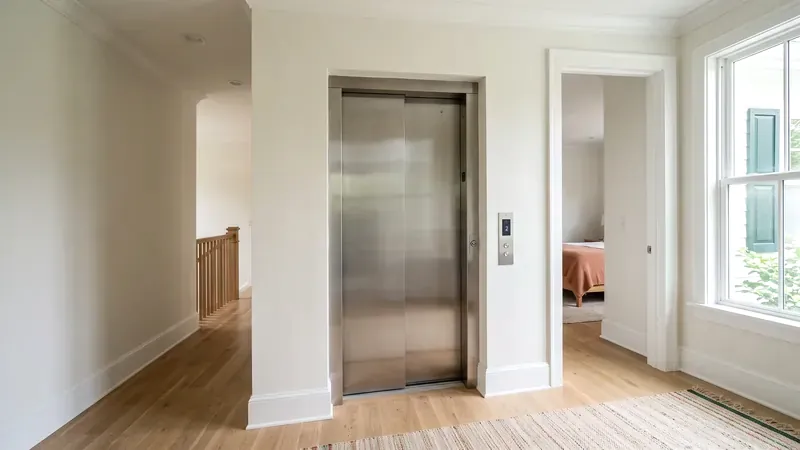 Traction or cable elevator | $25,000–$45,000 |
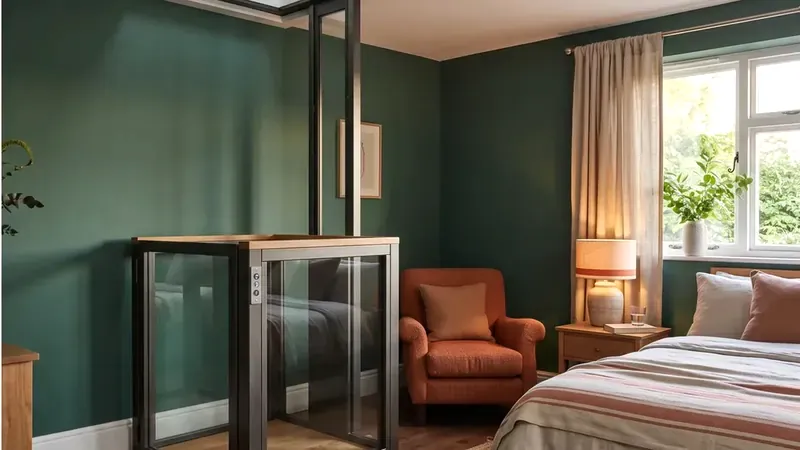 Through floor lift | $28,000–$54,000 |
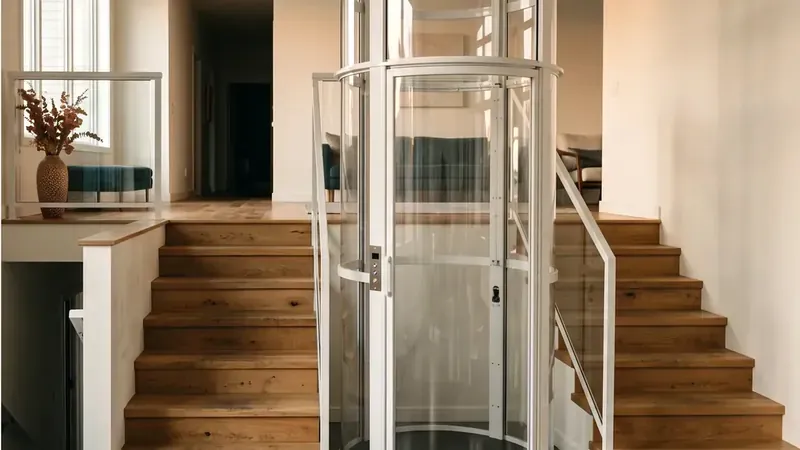 Pneumatic vacuum elevator | $33,000–$54,000 |
Installed for two floors. Also priced: a platform lift (an open platform, not an enclosed elevator) $5,000–$20,000, and a glass elevator $50,000–$100,000. Yearly service: $300–$760 (Angi).
Rules and Installer Pay in Kansas
- Licensed installer for home work
- No: home work is exempt
- Elevator installer pay
- $40.75 an hour (US $52.84)
- Permit or inspection from the state, for a private home
- Not needed
- State help to pay in Kansas
- Tax credit, Medicaid waiver, low-cost loan
Rules set by the Kansas State Fire Marshal.
The typical price is the middle of 51 published US prices for two floors (HomeGuide alone quotes $30,000 to $60,000). How the figures are built.
A home elevator typically costs $30,000 to $50,000 once installed, going by national prices, and Kansas adds no permit or inspection charge for a private single-family house. Want a firm number for your own home? Call now and tell us your floors and what you need, and we'll walk you through your options and next step.
What a Home Elevator Costs
A two-story home elevator typically costs $30,000 to $60,000 installed, according to HomeGuide. The kind of lift you pick drives most of the price. Here is what each kind tends to run, installed:
- A platform lift usually falls around $5,000 to $20,000.
- Shaftless models generally run about $20,000 to $35,000.
- Small units land near $25,000 to $30,000.
- Hydraulic lifts span roughly $25,000 to $56,500.
- A shaft-based system tends to sit between $25,000 and $56,500.
- Traction lifts come in around $27,000 to $50,000.
- Throughfloor designs usually cost about $30,000 to $60,000.
- Pneumatic elevators run near $35,000 to $60,000.
- Glass elevators are the priciest, at roughly $50,000 to $100,000.
These are typical middle-of-the-road ranges from several published prices, and your own number may land in or near them. Call now and we'll help you pin it down.
Extra Costs That Raise the Price
Every floor past two adds roughly $9,000 to $15,000. If a shaft has to be built new inside an existing house, that adds $5,000 to $25,000, per Willow Home. The shaft is the enclosed column the elevator moves through.
Labor shows up on the bill too. Installers in Kansas typically earn about $40.75 an hour, well below the $52.84 national figure, per the Bureau of Labor Statistics.
Permits and Inspections in Kansas
The Kansas Elevator Safety Act calls for registration and a yearly inspection, but elevators inside a single-family home are exempt. You can still hire a licensed elevator inspector to look at your home unit, and the inspection fee would be yours to pay. Kansas law lists no set state fee for this.
Building and electrical permits come from your city or county instead. Local governments can adopt elevator rules that are stricter than the state's, so check with yours before the work begins.
Wichita and Sedgwick County run their own elevator program with an up-to-date safety code. When you call, we can help you learn which rules apply to your address.
Who Can Install a Home Elevator?
The Act makes state licences a requirement for elevator contractors, mechanics, and inspectors. But because single-family homes sit outside the Act, no state licence is needed for home jobs. A city or county that writes its own standards may hand out local licences.
Chairlifts for stairs are not counted as elevators under the Act, so they stay outside it no matter where in Kansas you are.
Help With the Bill
Three Kansas programs may ease the cost:
- Kansas Disabled Access Credit: This income tax credit helps you make your own home, or a parent's or child's home, easier to get around in for someone living with a disability. The portion you can claim shrinks as income climbs and hits 0% above $55,000. Per the Kansas Department of Revenue, the credit can be no larger than $9,000.
- Medicaid waivers for home and community based services: They pay for assistive services, home modifications included. The lifetime cap went from $7,500 up to $10,000 beginning in fiscal year 2023, per the Kansas Legislative Research Department.
- K-Loan: Loans at a preferred rate, arranged via Assistive Technology for Kansans, a University of Kansas program, covering some or all of what assistive technology costs. Details are here.
Your House, Your Price
Your price depends on your floors, your layout and the lift you choose. Call now to get started on a price for your home.
Sources: middle of published US price ranges, Kansas elevator rule (Kansas State Fire Marshal), BLS wage figures for Kansas, Kansas Disabled Access Credit, Kansas HCBS waivers, K-Loan.
Talk to a Lift Installer Near You
One call gets you a local home elevator dealer who can measure your house and put a written price on it.