
Stair Lift vs Home Elevator
A stair lift is a seat that rides a rail up the stairs; a home elevator is a cab that carries you, a wheelchair or a helper between floors.
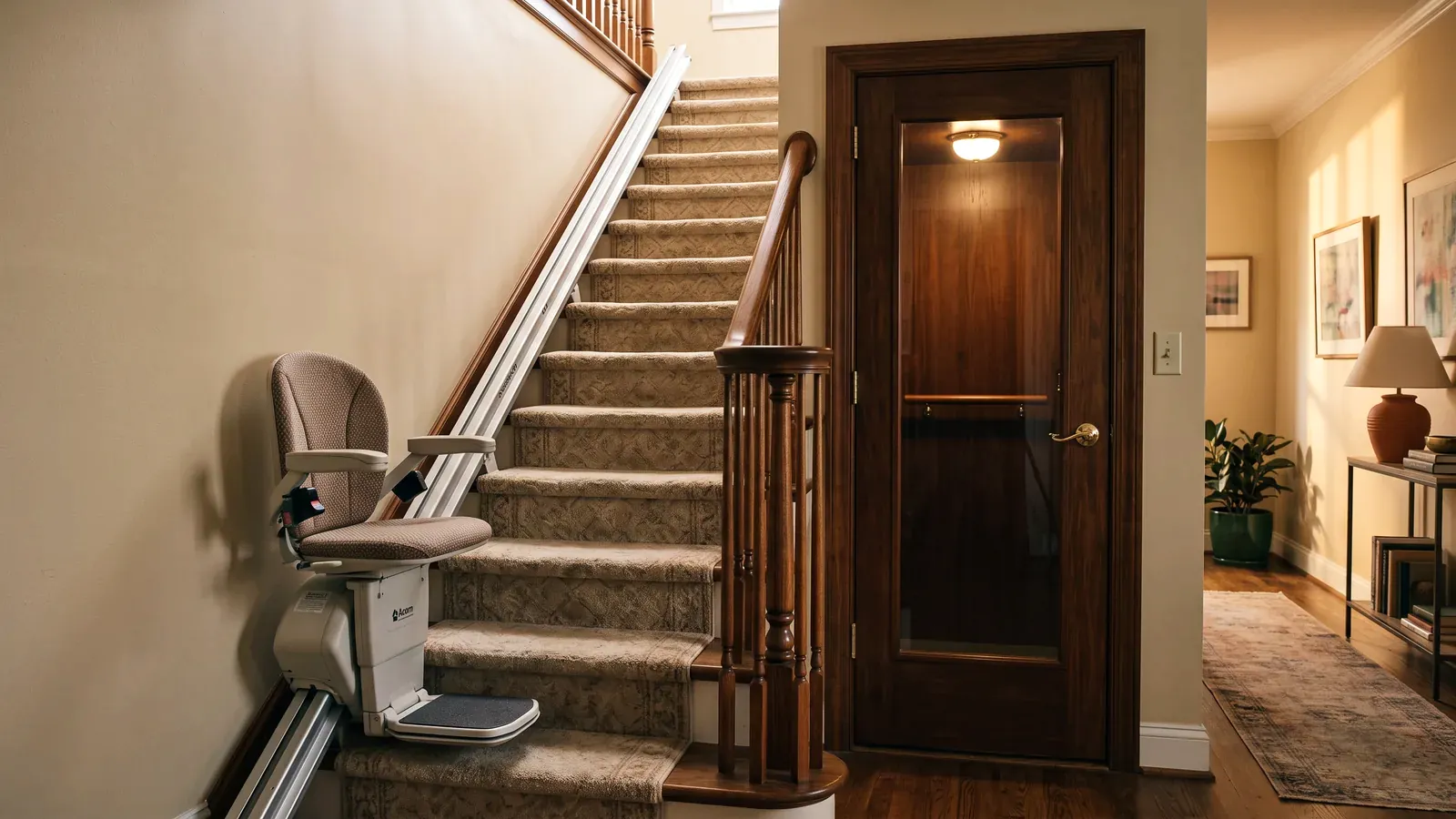
In the stair lift vs home elevator choice, the big difference comes down to what rides inside. A stair lift is simply a chair that slides along a rail fitted to your stairs. A home elevator moves a whole cab between floors, roomy enough for you, a wheelchair, or someone helping you, and it comes with a much bigger bill.
- Home elevator, what you typically pay installed
- $30,000 to $50,000
- Platform lift that rises straight up, what you typically pay installed
- $5,000 to $20,000
- Platform lift that follows the stairs
- $15,000 to $35,000
- What each floor past two adds?
- $9,000 to $15,000
Picking Between a Stair Lift and a Home Elevator
A stair lift works well if you can still get in and out of a seat on your own. It uses the staircase you already have, so you travel the same route you always walked, only sitting.
A home elevator makes sense when someone in the house uses a wheelchair, needs another person beside them, or has to bring items up and down. The 2010 ADA Standards call for a wheelchair to have open floor space of at least 30 by 48 inches. That number gives you a rough idea of the room a cab or platform should offer.
The Cost of Stair Lifts and Home Elevators
The sources we rely on do not give a price for a plain stair lift seat. What they do cover are lifts that travel along stairs or rise a short way, plus full elevators. Typical installed prices are what you will find in this table. Each figure draws on a number of published ranges, and the notes that follow link to those sources.
| Kind of lift | Installed price, 2 floors | Shaft or pit |
|---|---|---|
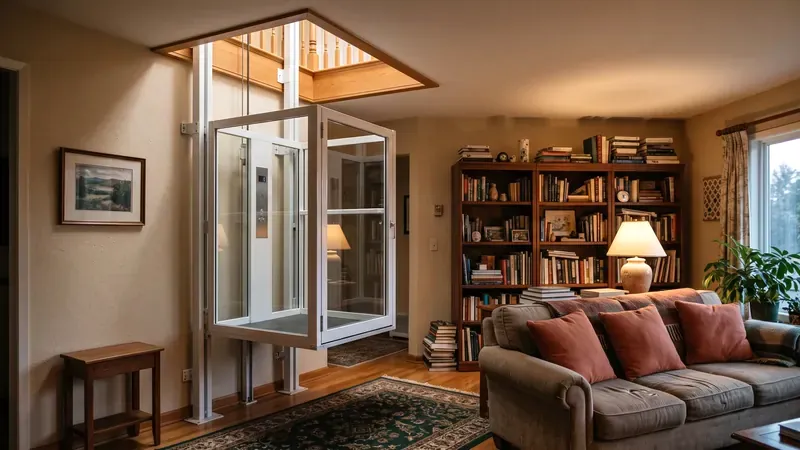 Shaftless home elevator | $20,000–$35,000 | No shaft or pit |
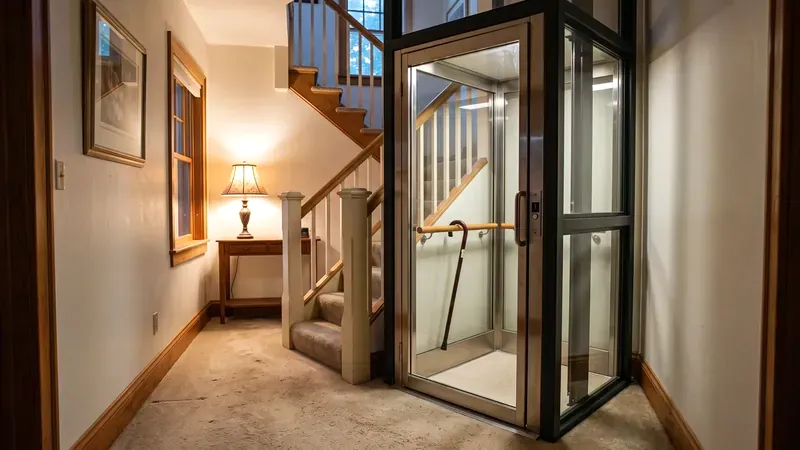 Small one person lift | $25,000–$30,000 | No shaft or pit |
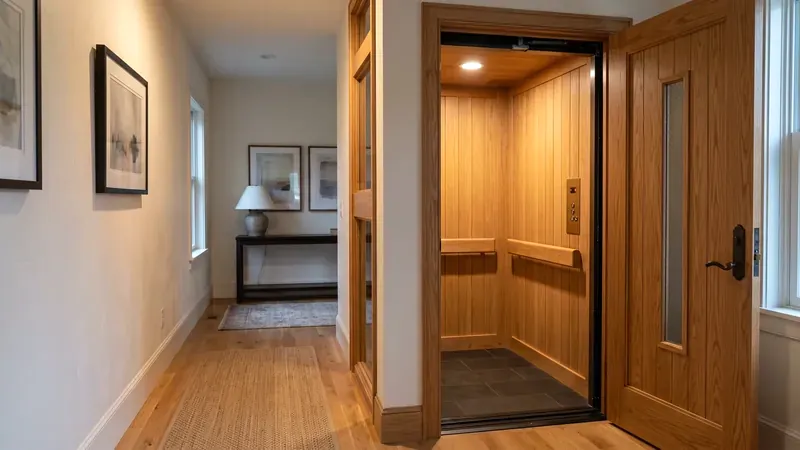 Hydraulic elevator | $25,000–$56,500 | Built shaft and a small pit |
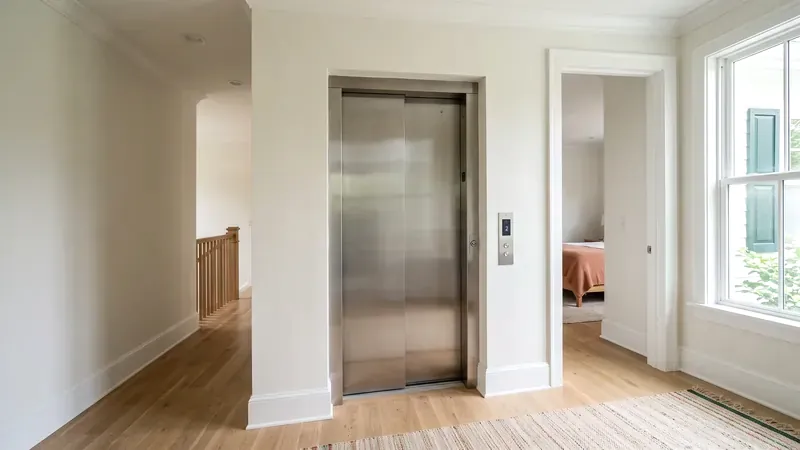 Traction or cable elevator | $27,000–$50,000 | Built shaft and a shallow pit |
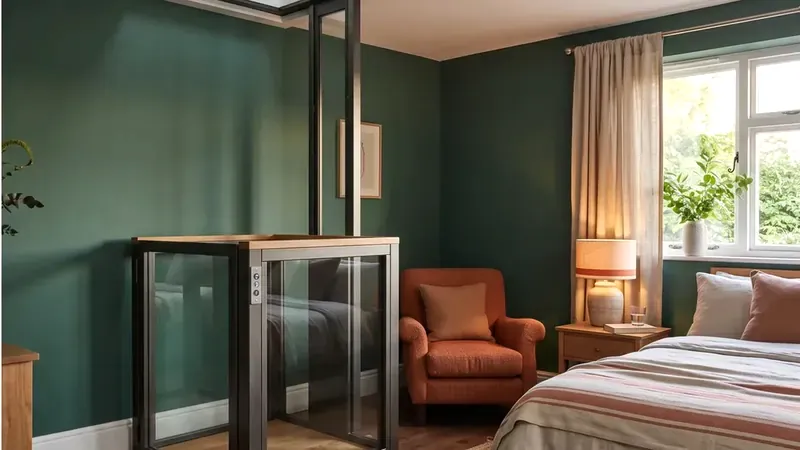 Through floor lift | $30,000–$60,000 | No shaft, an opening in the ceiling |
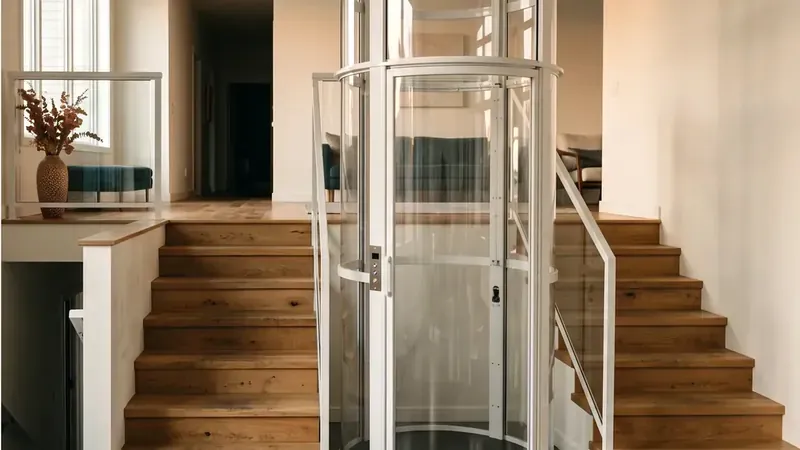 Pneumatic vacuum elevator | $35,000–$60,000 | No shaft or pit |
Installed for two floors. Also priced: a platform lift (an open platform, not an enclosed elevator) $5,000–$20,000, and a glass elevator $50,000–$100,000.
With an incline platform lift, a flat platform rides a rail along your stairs, a lot like a stair lift, except it can hold a wheelchair. HomeGuide places it between $15,000 and $35,000.
This kind of vertical platform lift moves straight up and straight down, and it often serves a porch or a short flight of steps. Angi reports that these lifts can rise up to 14 feet, indoors or out, at a cost of $5,000 to $20,000. One seller, Lifeway Mobility, puts the figure at $12,000 to $35,000 once a professional does the installation.
Home Elevator Prices From Different Sources
What different publishers say about two-story home elevator prices does not always match. Here is each report.
- HomeGuide: $30,000 to $60,000, with $48,000 as the average across the country
- Fixr: prices run $35,000 up to $60,000, averaging $50,000 nationwide
- Lifeway Mobility, which sells these lifts: $35,000 to $80,000, with tax, shipping, and installation all counted in
- Pneumatic Vacuum Elevators, the company that builds them: $35,000 to $100,000, and two floors average about $45,000
Each additional floor pushes the price up. HomeGuide figures roughly $9,000 to $15,000 for every floor beyond two. So a three-story home would add that amount one time on top of the base cost for two floors.
Elevator Options That Skip the Shaft
Plenty of people would like an elevator that goes between floors without the trouble of putting in a shaft. That shaft is the enclosed channel a traditional elevator cab moves within. Adding one to a house that already stands costs $5,000 to $25,000, per Willow Home.
A few lift types avoid that job entirely.
- Shaftless elevator: a small cab traveling between floors with no shaft around it; typical cost $20,000 to $35,000.
- Through-floor lift: a cab that rises through an opening cut in the ceiling and floor; typical cost $30,000 to $60,000.
- Air-pressure lift: a cab pushed along by air inside a clear tube; typical cost $35,000 to $60,000.
We work out the typical prices in this list using our own method. For every type, we find the midpoint of the published low prices and the midpoint of the published high prices, then we round each to the closest $500.
Questions People Often Ask
For stairs, which works better: a chair lift or an elevator?
The answer turns on whether a wheelchair has to travel up the stairs as well. A chair lift takes only a seated rider, so a wheelchair would be left waiting at the top. When a wheelchair must go along, an incline platform lift is one choice that still follows the staircase.
If a stair lift is not right, what else can seniors try?
Vertical platform lifts can cost less than many elevators. Installed, they usually run $5,000 to $20,000, though they only manage about a 14-foot rise. A small home elevator generally comes in at $25,000 to $30,000 with installation.
Home elevator versus stair lift: what are the upsides and downsides?
An elevator holds more, including a wheelchair and a second rider, and it can reach three or more floors. Cost is the clear downside. Prices often climb to $60,000, and a glass model can climb to $100,000.
Where does the typical price come from?
For every lift type, we collect the published price ranges. Then we find the midpoint across the low ends and the midpoint across the high ends, rounding each to the closest $500. Take the home elevator: its overall typical figure rests on 51 published ranges and lands at $30,000 to $50,000.
Talk to a Lift Installer Near You
One call gets you a local home elevator dealer who can measure your house and put a written price on it.