
Hydraulic vs Traction Elevator
A hydraulic home elevator is pushed up by a fluid-driven piston; a traction elevator is pulled up by a motor with cables, belts or chains and a counterweight.
- Hydraulic, installed (typical)
- $25,000–$56,500
- Traction or cable, installed (typical)
- $27,000–$50,000
- Hydraulic service a year
- $400–$1,000
- Traction service a year
- $300–$900
Hydraulic vs Traction at a Glance
| What you compare | Hydraulic | Traction or cable |
|---|---|---|
| Installed price, 2 floors | $25,000–$56,500 | $27,000–$50,000 |
| Service a year | $400–$1,000 | $300–$900 |
| How it lifts | A pump pushes oil into a piston beside the cab | Belts or ropes over a pulley with a counterweight; cable models wind a drum |
| Machine room | Yes, a small room or closet for the pump | No, the machine sits inside the shaft |
| Pit under the floor | 6 to 12 in | 3 to 8 in |
| Clear height over the top floor | 92 to 96 in | 96 to 108 in |
| Power | 230 V, 30 amp circuit, plus a 120 V light circuit | 230 V, 20 to 30 amp circuit, plus a 120 V light circuit |
| Carries | 950 to 1,000 lb | 500 to 1,400 lb |
| Takes a wheelchair | 5 of the 5 models listed | 6 of the 9 models listed |
Pick hydraulic for the heaviest loads and a lower starting price, if there is room for a pump closet next to the shaft. Pick traction or cable when there is no spare room for a machine and you want lower yearly service.
Get written quotes on both drives or call 888-841-5835. Pit, height and power ranges come from each manufacturer's planning guide for these models.
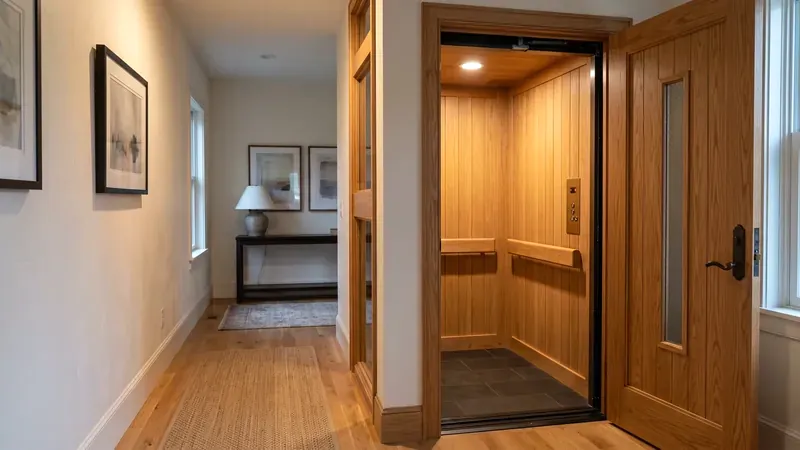
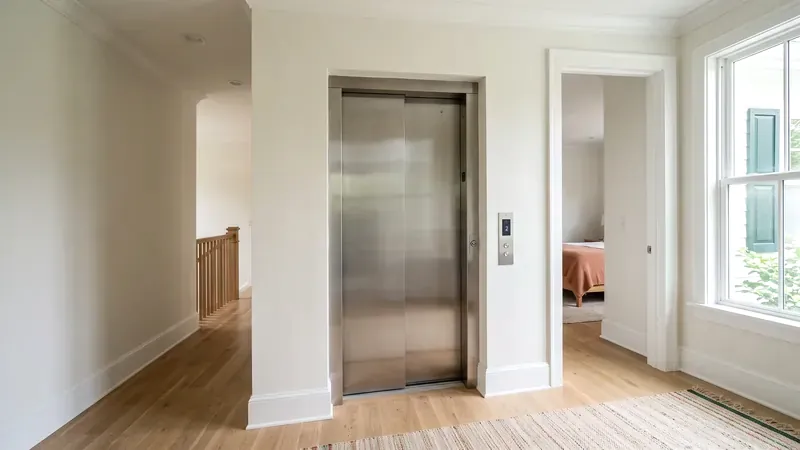
Hydraulic and Traction Models
| Brand | Model | Drive | Price | Pit | Clear height | Carries (lb) | Wheelchair |
|---|---|---|---|---|---|---|---|
 | Eclipse | Counterweight drive | Dealer quote | 8 in | 96 in | 950 | Yes |
| Infinity | Hydraulic | Dealer quote | 8 in | 92 in | 950 | Yes |
| Vuelift Round Acrylic | Cable winding drum | Dealer quote | 4 in | 108 in | 840 | No |
| Vuelift Octagonal+ Glass | Cable winding drum | Dealer quote | 4 in | 108 in | 950 | Yes |
| Vuelift Mini | Cable winding drum | Dealer quote | 3 in | 96 in | 500 | No |
 | Elevette Hydraulic 1000 | Hydraulic | $25,000–$35,000, cost guides | 10 in | 96 in | 1,000 | Yes |
| Elevette Cable Drum 500 | Cable winding drum | $25,000–$35,000, cost guides | 6 in | 96 in | 500 | Yes |
 | Elite Plus | Hydraulic | $23,995 list, lift only | 12 in | 96 in | 1,000 | Yes |
 | Freedom Green WD | Cable winding drum | $20,000–$30,000, manufacturer’s range | 6 in | 96 in | 1,000 | Yes |
| Freedom Elite | Cable winding drum | Dealer quote | Not published | Not published | 1,400 | Yes |
 | Symmetry Inline Gear Drive (IGD) | Counterweight drive | Dealer quote | 6 in | 96 in | 1,000 | Yes |
| Symmetry Hydraulic | Hydraulic | Dealer quote | 6 in | 94 in | 1,000 | Yes |
 | E50 Compact Electric | Counterweight drive | Dealer quote | 6 in | 96 in | 500 | No |
| Elmira | Hydraulic | Dealer quote | 8 in | 96 in | 950 | Yes |
Sizes from each manufacturer's planning guide (model links). Full sizes for every kind of lift: home elevator dimensions. Help with the cost: grants, loans and the tax deduction.
If you are comparing a hydraulic vs traction elevator for your home, you may be surprised by how alike they look on paper. Installation costs land in roughly the same range, both travel at similar speeds, and both move similar loads. Where they truly differ is in the room they take up, what they need in care over the years, and which expenses show up down the road.
These install figures are the site's typical ranges, pulled from the middle of a large set of published quotes. For the upkeep numbers, the source is Angi.
Hydraulic and Traction Side by Side
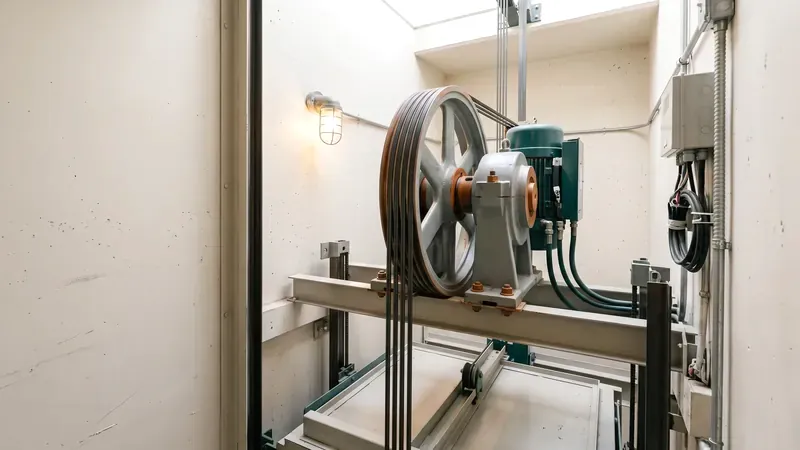
With a hydraulic elevator, a pump pushes fluid to raise the cab. A traction elevator works differently: belts or steel ropes pass over a pulley and lift the cab, while a counterweight sits on the opposite end, according to TK Elevator. That counterweight is just a heavy block matched to the cab, and it spares the motor a lot of effort.
A machine room is its own small space that holds the motor or pump. Residential Elevators says you need one with hydraulic but not with traction. A pit is a shallow opening beneath the bottom level of the house, and both drives need one. A traction lift needs at least 8 inches of depth there, per Home Elevator of Houston, and hydraulic home models ask for 6 to 12 inches. Both ride at 32 to 40 feet a minute, travel up to 50 feet and carry 750 to 1,000 lb, per RetirementLiving.
Hydraulic has genuine advantages. There are fewer parts in motion, the install tends to run cheaper, and it uses less power while waiting and nearly zero on the way down, TK Elevator explains.
There are downsides too. The fluid is typically oil-based, which makes a leak an environmental hazard. You also have to test and treat the fluid on a schedule, or you risk travel failures and noise from the pump.
How a Cable Driven Home Elevator Works
A cable driven home elevator is often sold beside traction lifts, but it works another way. In the winding drum design, the motor turns a drum that the cable coils around, and that winding motion hauls the cab upward, with no counterweight. Installed, this version runs $28,000 to $50,000, HomeGuide says.
Cables do not last forever. Angi puts the replacement bill at $2,000 to $3,000, needed every three to five years. A winding drum lift takes about $300 to $600 a year in upkeep.
Pneumatic vs Hydraulic Elevators at Home
A pneumatic elevator, sometimes called a vacuum elevator, rides on air pressure inside a transparent tube. There is no pit, no shaft, no machine room, and installation wraps up in two to three days, Southeast Elevator reports. It is somewhat slower, moving 30 to 35 feet a minute compared with 40 for hydraulic.
| Pneumatic | Hydraulic | |
|---|---|---|
| Usual installed price | Between $35,000 and $60,000 | Between $25,000 and $56,500 |
| Care cost per year | Between $200 and $1,000 | Between $400 and $1,000 |
| Shaft, pit, machine room | Nothing needed | Both shaft and machine room |
The prices above come from the site's typical ranges. For the pneumatic care numbers, we blend Angi with HomeGuide.
Residential Traction Elevator Cost
Design drives what a traction elevator costs. These installed prices come from HomeGuide.
| Traction lift design | Price installed |
|---|---|
| Winding drum (cable) | $28,000–$50,000 |
| Geared, counterweighted | $30,000–$60,000 |
| Gearless, counterweighted | $50,000–$75,000 |
HomeGuide prices each design on its own, while the $27,000 to $50,000 at the top of this page is the middle of every published range for traction and cable lifts. Other estimates, for reference only: Angi and Fixr both land between $15,000 and $35,000, RetirementLiving gives $40,000 to $120,000 for a two stop traction lift, a vacuum elevator manufacturer quotes $50,000 to $120,000, and Willow puts it at $45,000 to $90,000 around Boulder and Denver.
Adding an Elevator to an Existing House
Those prices assume a two floor home. HomeGuide says every floor past two adds $9,000 to $15,000. Putting any shaft type of lift into a house that is already built adds $8,550 to $35,900. That money covers the shaft construction, design and engineering work, a dedicated circuit for power, and the permit fee.
Common Questions
Hydraulic or Traction: Which Costs Less?
For two floors they cost about the same: hydraulic usually runs $25,000 to $56,500 installed and traction or cable $27,000 to $50,000. Hydraulic often starts lower, while traction costs a little less to service each year, $300 to $900 against $400 to $1,000, per Angi. The surest comparison for your own house is to get quotes on both.
Telling a Hydraulic Elevator from a Traction One
A separate machine room with a pump inside points to hydraulic. Ropes or belts holding the cab, with a counterweight in the shaft, mean traction.
Switching Later from Cable to Hydraulic
Yes, though it will cost you. Fixr puts the bill for converting the drive from cable to hydraulic at $5,000 to $10,000.
Talk to a Lift Installer Near You
One call gets you a local home elevator dealer who can measure your house and put a written price on it.