
Home Elevator Installers
Home elevator installers are dealers whose crews fit a lift in a private home; in many states they must hold a state elevator licence before they start.
- Installer median pay (US)
- $52.84 an hour
- Labor in a typical bill
- $5,000 to $15,000
- Training before a mechanic works alone
- 4-year apprenticeship
- Fitting, once the house is ready
- 4 to 7 days on site
- Yearly upkeep
- about $300 to $760
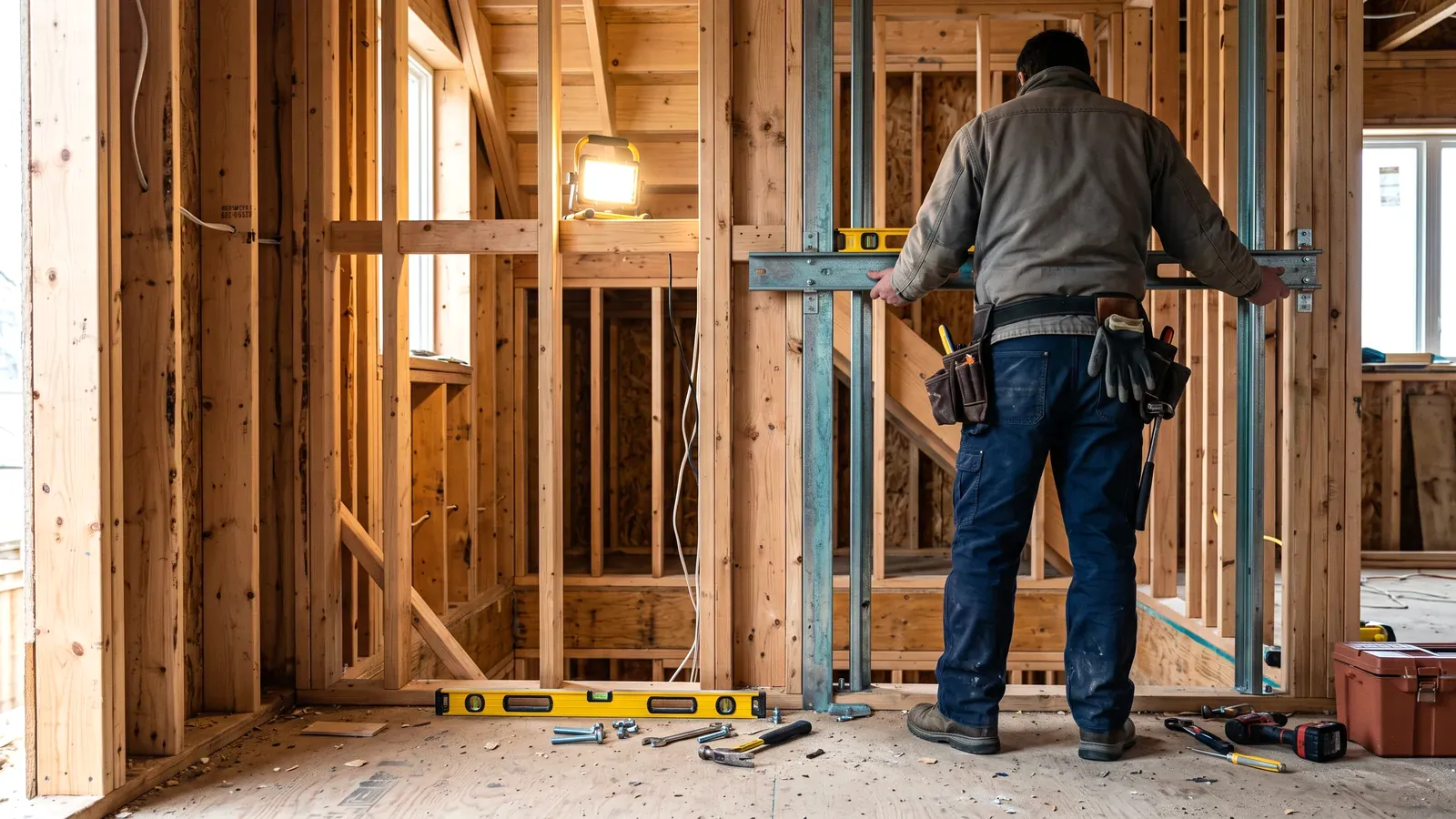
Whether home elevator installers need a state elevator licence depends on where you live, and many states leave private homes out of their elevator rules altogether. One cost guide puts labor at about $5,000 to $15,000, and a finished two-floor job typically costs $30,000 to $50,000. When your house is prepped, the crew often spends about a week on site.
- Typical price, installed: $30,000 to $50,000
Local Home Elevator Installers
A good first step is to ask a local installer to visit your home before quoting. They can see your stairs and floor layout and tell you which kinds of lift would fit. The manufacturer Cibes Symmetry, for instance, recommends that a local licensed residential elevator agent help you decide whether an outdoor lift can handle your weather.
As you size up nearby installers, here's what's worth asking:
- Do they carry the elevator licence your state asks for, if it asks for one?
- Whose lifts do they install?
- Who handles the permit and schedules the inspection?
- Who takes care of the electrical side?
- What will a yearly service call set you back?
Do Home Elevator Installers Need a Licence?
The US Bureau of Labor Statistics says most states make elevator installers and repairers get a licence. Nearly everyone in the trade learns it through an apprenticeship, which is paid, hands-on training usually spread over four years.
Plenty of states, however, don't count elevators in private houses under their elevator rules. There, a residential job might not call for a state licence, though your local building office may still write its own requirements.
An exemption from elevator licensing does not necessarily exempt the electrical work. In Alaska, for example, the power feeding the lift must be installed by certified electricians.
Home Elevator Installer Rules by State
Installer Labor and Total Job Cost
One cost guide puts installation labor at about $5,000 to $15,000, though your quote may bundle labor differently, so ask what it covers. The type of lift you pick has a big effect on the total. A shaftless model travels on rails through a hole cut into the floor, so there's no enclosed shaft to build. A pneumatic one is pushed up and down by air pressure inside a clear tube.
| Kind of lift | Installed price, 2 floors | Shaft or pit |
|---|---|---|
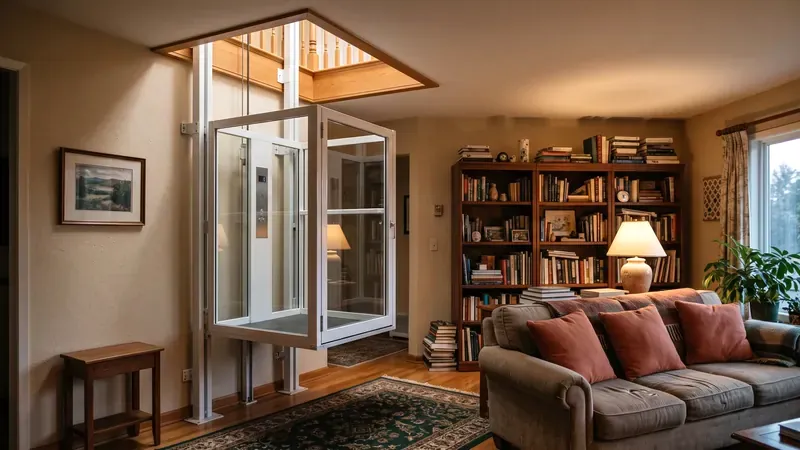 Shaftless home elevator | $20,000–$35,000 | No shaft or pit |
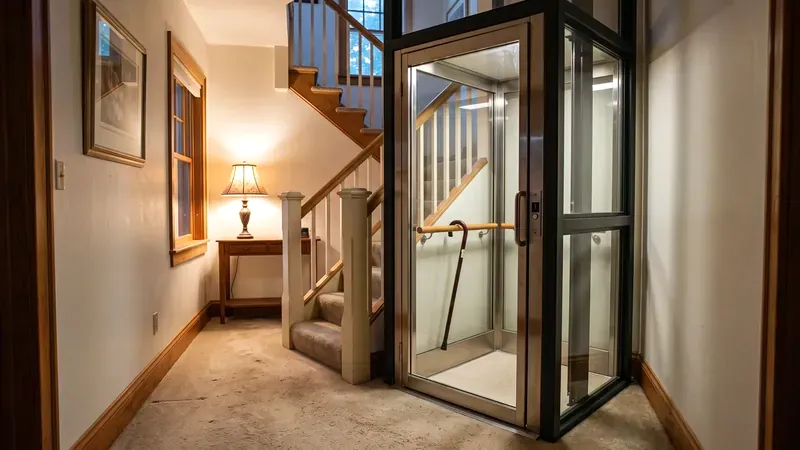 Small one person lift | $25,000–$30,000 | No shaft or pit |
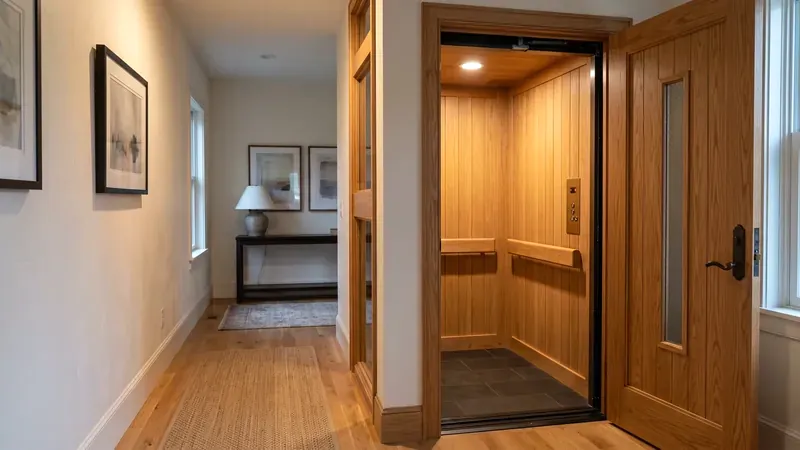 Hydraulic elevator | $25,000–$56,500 | Built shaft and a small pit |
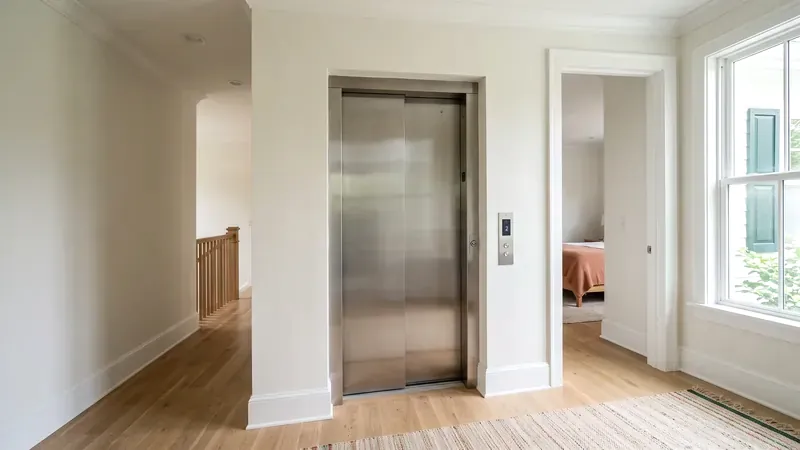 Traction or cable elevator | $27,000–$50,000 | Built shaft and a shallow pit |
 Through floor lift | $30,000–$60,000 | No shaft, an opening in the ceiling |
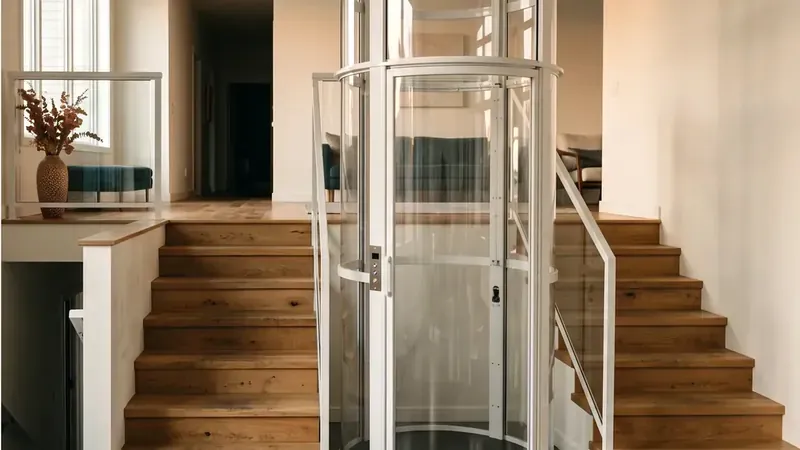 Pneumatic vacuum elevator | $35,000–$60,000 | No shaft or pit |
Installed for two floors. Also priced: a platform lift (an open platform, not an enclosed elevator) $5,000–$20,000, and a glass elevator $50,000–$100,000.
These are typical installed prices by lift type. Every floor past two tacks on roughly $9,000 to $15,000.
The Cost of Permits, Wiring, and Inspections
Ask whether your installer will get the permit and set up the inspection, and keep in mind the lift needs its own power supply. That means a dedicated circuit, a line off your electrical panel that serves nothing but the elevator. Here's what HomeGuide says these extras cost:
| Expense | Usual cost |
|---|---|
| Dedicated circuit | $250 to $900 for each circuit |
| Permit | $300 to $2,000 for the whole project |
| Inspection | $150 to $700 for each inspection visit |
By some other estimates, permits run $500 to $2,500, and one manufacturer of pneumatic lifts quotes $1,000 to $3,000.
What's the Timeline for Installation?
Once the site is structurally ready, the install itself generally runs 4 to 7 days. Certain models go in faster.
| Lift type | Days the crew needs |
|---|---|
| Pneumatic (one manufacturer's quote) | 2 to 3 |
| Shaftless model | 3 to 5 |
 Savaria Eclipse | 5 to 7 |
Questions People Often Ask
What's the added cost of putting an elevator into an existing house?
A house that's already standing needs prep work before the lift arrives. For a shaftless unit, figure roughly $1,550 to $5,900 for the hole in the floor, the circuit, and the permit. For a shafted lift, building the shaft plus design, engineering, the circuit, and the permit may add roughly $8,550 to $35,900, so ask which of these costs your quote already includes.
How long will you wait before work can begin?
Delivery can take longer than the installation itself: one manufacturer estimates 8 to 10 weeks from drawing approval to delivery.
Who does the wiring on a home elevator?
Idaho requires a licence for the elevator's electrical work, while North Carolina requires the installing company to hold a state electrical licence. Ask each installer which electrician will provide the lift's dedicated circuit and whether that cost is included in the quote.
What does the installer charge for upkeep once the lift is in?
Plan on about $300 to $760 a year for maintenance, averaging $510. For a shaftless lift, an annual contract that includes inspection runs about $250 to $700.
Talk to a Lift Installer Near You
One call gets you a local home elevator dealer who can measure your house and put a written price on it.