
Home Elevator Cost in North Carolina
- Typical installed price, 2 floors (US)
- $30,000–$50,000
- Our estimate for North Carolina, 2 floors
- $30,000–$50,000
- US range, cheapest to dearest kind
- $20,000–$60,000
- State permit in North Carolina
- No: local building department handles it
: A lift inside a single-family home isn't handled by the state elevator bureau. Your city or county building inspections office handles the permit and inspection, and its fees apply.
Installed Price by Kind of Lift
Installed for two floors. Our North Carolina estimate moves each US price by the same share as the state's two-floor estimate (elevator installers' pay against the US).
| Kind of lift | Our estimate in North Carolina, 2 floors |
|---|---|
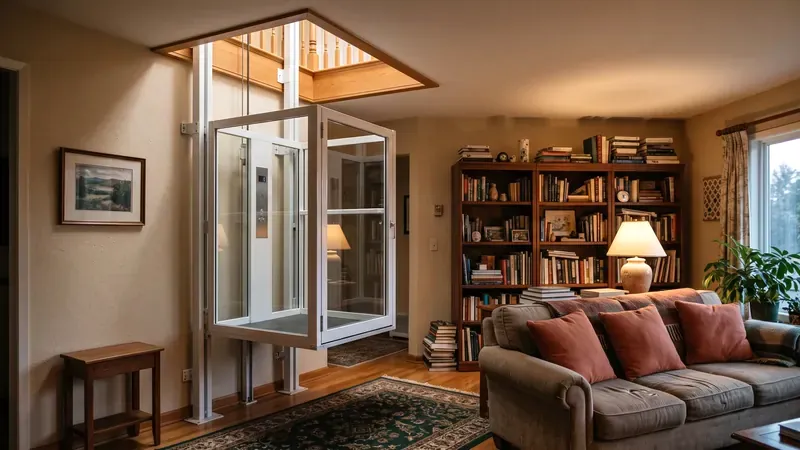 Shaftless home elevator | $20,000–$35,000 |
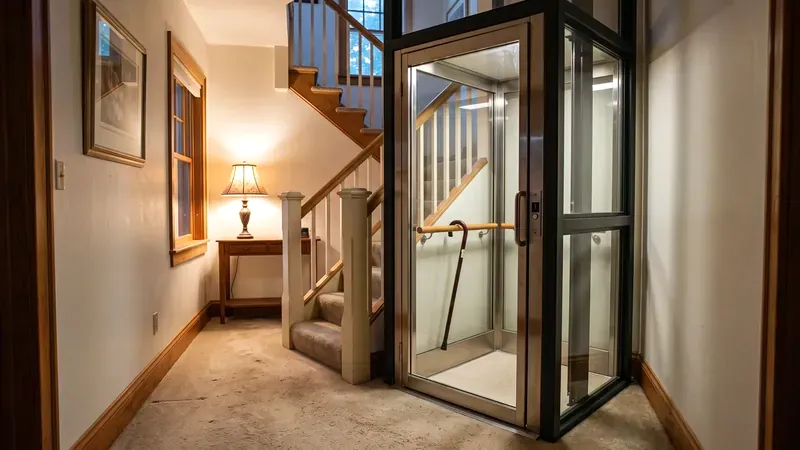 Small one person lift | $25,000–$30,000 |
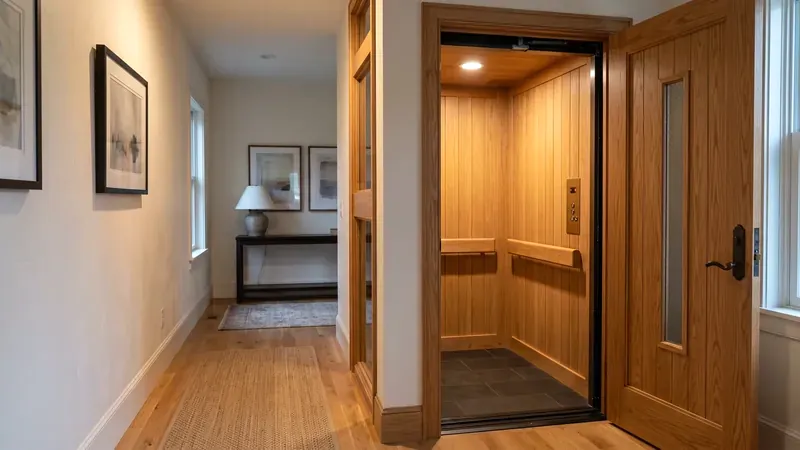 Hydraulic elevator | $25,000–$57,000 |
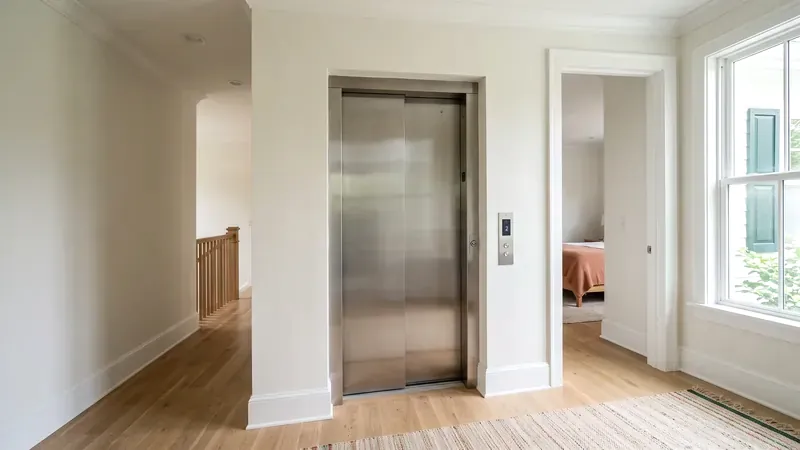 Traction or cable elevator | $27,000–$50,000 |
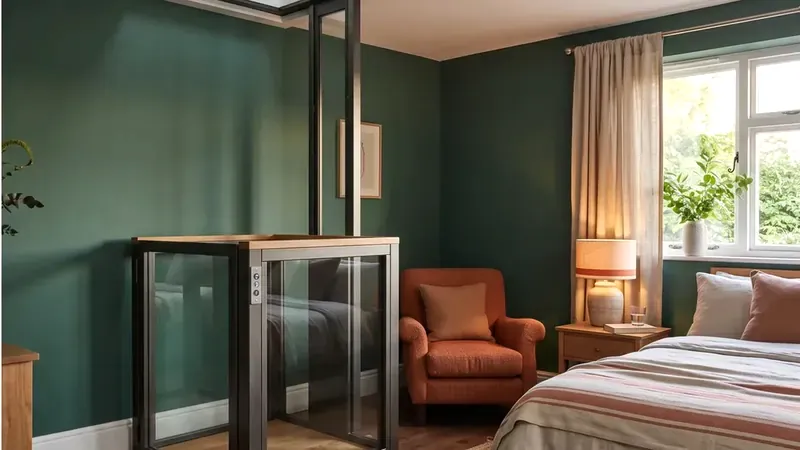 Through floor lift | $30,000–$60,000 |
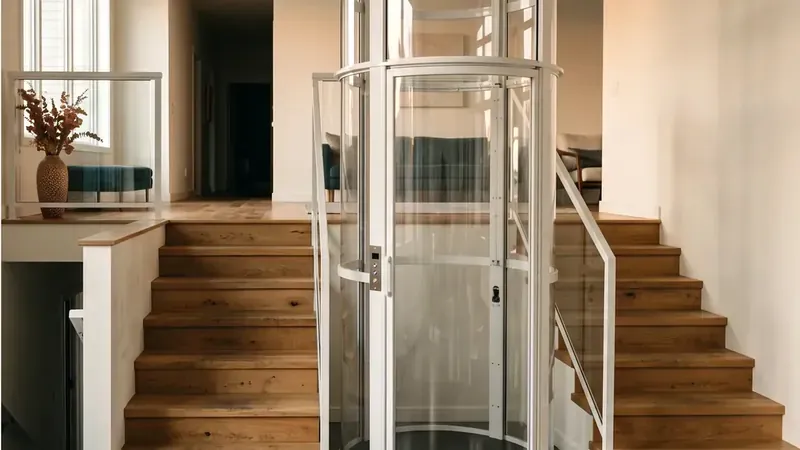 Pneumatic vacuum elevator | $35,000–$60,000 |
Installed for two floors. Also priced: a platform lift (an open platform, not an enclosed elevator) $5,000–$20,000, and a glass elevator $50,000–$100,000. Yearly service: $300–$760 (Angi).
Rules and Installer Pay in North Carolina
- Licensed installer for home work
- No state elevator licence
- Elevator installer pay
- $51.78 an hour (US $52.84)
- Shaftless and platform lifts can cost far less, from
- about $5,000 to $35,000
- Adding a shaft to an existing house can add
- $5,000 to $25,000
- State help to pay in North Carolina
- Medicaid waiver, low-cost loan
Rules set by the North Carolina Department of Labor.
The typical price is the middle of 51 published US prices for two floors (HomeGuide alone quotes $30,000 to $60,000). How the figures are built.
A home elevator in North Carolina typically costs $30,000 to $50,000 installed, based on published national prices. Your price depends mostly on the kind of lift you pick and the layout of your house. Call now to discuss your home and get a quote based on the lift and installation it needs.
What Does Each Kind of Lift Cost?
The kind of lift you choose moves the price a lot. The prices in this list are typical installed costs drawn from published pricing.
- Platform lifts: about $5,000 to $20,000 installed
- Shaftless lifts: roughly $20,000 to $35,000 installed
- Small lifts: around $25,000 to $30,000 installed
- Hydraulic lifts: typically $25,000 to $56,500 installed
- Traction lifts: usually $27,000 to $50,000 installed
- Throughfloor lifts: about $30,000 to $60,000 installed
- Pneumatic lifts: roughly $35,000 to $60,000 installed
- Glass lifts: often $50,000 to $100,000 installed
The shaft is simply the closed column the elevator rides up and down inside. Published prices for elevators that use a shaft typically range from $25,000 to $56,500 installed. Nobody can give you a firm number for your own house until they measure it, so a written quote is what counts.
What Pushes the Price Up?
Two factors drive the bill higher more than anything else. Every floor past two costs roughly $9,000 to $15,000 more. And putting a new shaft into a house that was built without one runs about $5,000 to $25,000 extra, since the crew has to open up walls and floors and frame them back in.
A new shaft or an extra floor can add far more to your price than the choice between similar lifts.
Permit and Inspection Rules for a Home Elevator
For a single-family house you live in, the state elevator bureau isn't involved. Your city or county building inspections office takes care of that under the state building code, and you pay its fees.
For equipment the state does regulate, like lifts serving multifamily or commercial property, the state charges $200 or 1% of the contract price, whichever is larger. That permit must be posted where the work is happening, and every new installation or alteration gets a state inspection.
Who Is Allowed to Install One?
There is no state elevator mechanic licence in North Carolina. Instead, any company that installs elevator equipment needs an electrical licence issued by the state board that oversees electrical contractors. Before you sign anything, ask the installer for that number.
Ask your installer which safety requirements apply to your home. North Carolina's elevator bureau rules cover equipment the state regulates, not elevators in single-family homes.
Rules for Rented Homes
Weston's Law comes into play if a home gets rented 15 or more days a year, which covers plenty of beach and mountain vacation rentals. It went into effect on October 1, 2022. Under the law, the opening between the hoistway landing door and the door on the car can be no wider than four inches. A hoistway is just the shaft your elevator rides in.
Ways to Pay in North Carolina
A few state programs can help cover the cost:
- CAP/DA Medicaid waiver: This waiver, formally the Community Alternatives Program for Disabled Adults, now allows $28,000 for home modification, equipment, and technology across its current term, November 1, 2024 through October 31, 2029.
- Urgent Repair Program: Serves low-income homeowners with special needs whose income is under 50% of the area median. Local partners pay for accessibility changes with an interest-free deferred loan, and $5,000 of it is forgiven annually.
- Self-Help Credit Union Assistive Technology Loans: Open to North Carolina residents with a disability, and home modifications are an allowed use.
- North Carolina Assistive Technology Program: The state health department runs this one; it's a solid spot to learn about assistive technology.
Get Your Price in Writing
Every house is different, and a shaft or an extra floor can change the price by thousands. Call today and we'll look at your home, explain your options, and give you a written price you can plan around.
Sources: middle of published US price ranges, North Carolina elevator rule (North Carolina Department of Labor), BLS wage figures for North Carolina, CAP/DA Medicaid waiver, NC Housing Finance Agency Urgent Repair Program, Self-Help Credit Union Assistive Technology Loans.
Nearby states: Georgia · South Carolina · Tennessee · Virginia
Talk to a Lift Installer Near You
One call gets you a local home elevator dealer who can measure your house and put a written price on it.