
Home Elevator Cost in Virginia
- Typical installed price, 2 floors (US)
- $30,000–$50,000
- Our estimate for Virginia, 2 floors
- $30,000–$50,000
- US range, cheapest to dearest kind
- $20,000–$60,000
- State permit in Virginia
- No: local permit only, no yearly inspection
Permits: Just a local permit, and home elevators are exempt from the recurring inspections commercial units get
Installer: Must hold state certification as an elevator or accessibility mechanic
Installed Price by Kind of Lift
Installed for two floors. Our Virginia estimate moves each US price by the same share as the state's two-floor estimate (elevator installers' pay against the US).
| Kind of lift | Our estimate in Virginia, 2 floors |
|---|---|
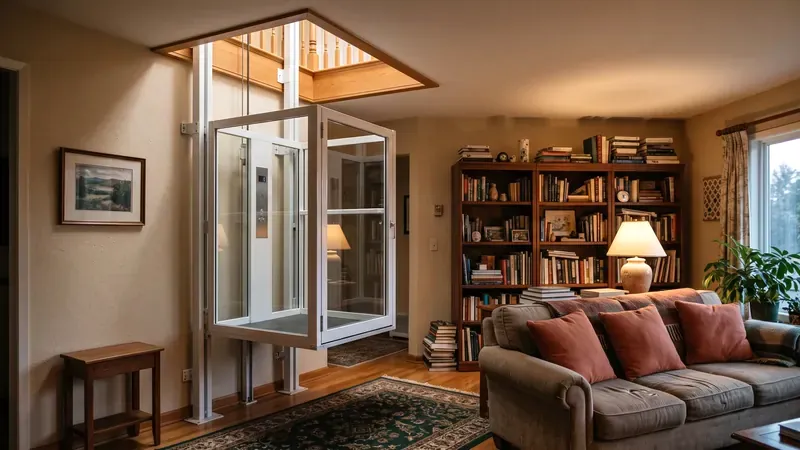 Shaftless home elevator | $20,000–$35,000 |
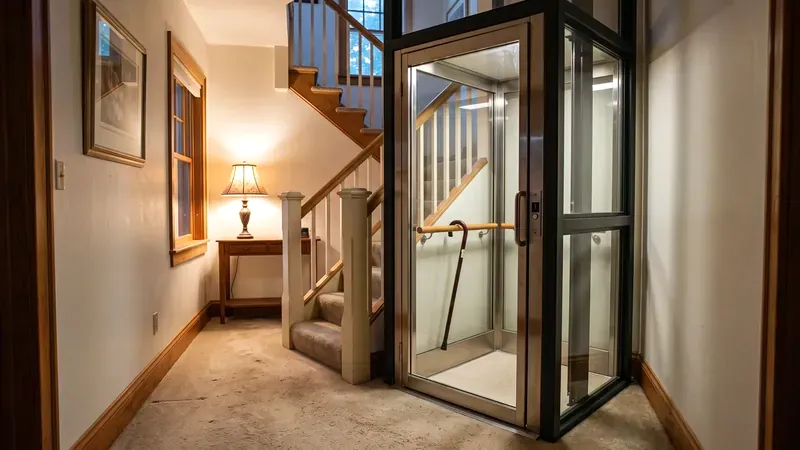 Small one person lift | $25,000–$30,000 |
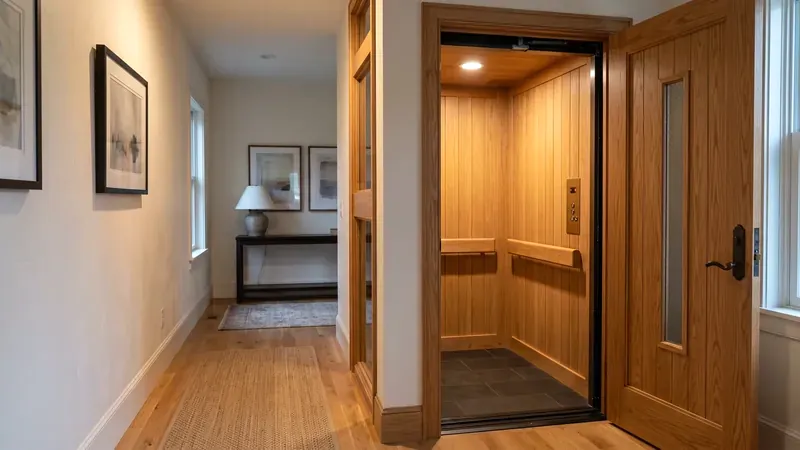 Hydraulic elevator | $25,000–$57,000 |
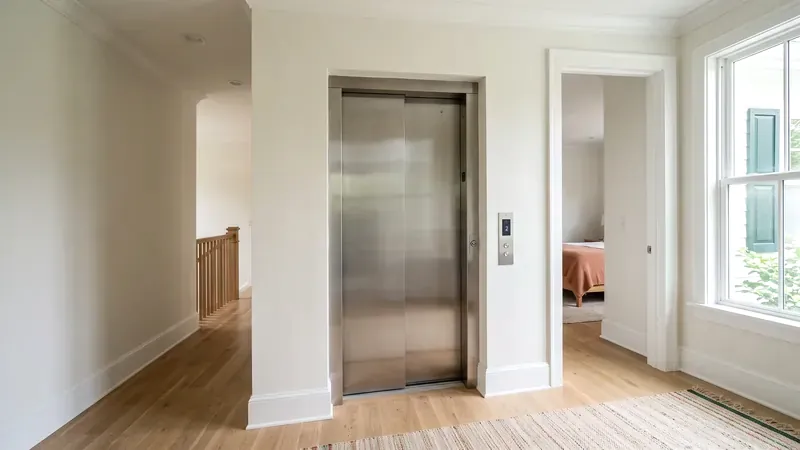 Traction or cable elevator | $27,000–$50,000 |
 Through floor lift | $30,000–$60,000 |
 Pneumatic vacuum elevator | $35,000–$60,000 |
Installed for two floors. Also priced: a platform lift (an open platform, not an enclosed elevator) $5,000–$20,000, and a glass elevator $50,000–$100,000. Yearly service: $300–$760 (Angi).
Rules and Installer Pay in Virginia
- Licensed installer for home work
- Yes: state accessibility mechanic certification
- Elevator installer pay
- $52.04 an hour (US $52.84)
- State tax break
- As much as $6,500 via the Livable Home Tax Credit
- State help to pay in Virginia
- Tax credit, Medicaid waiver (up to $5,000), low-cost loan
Rules set by the Local building departments enforcing the Virginia Uniform Statewide Building Code.
The typical price is the middle of 51 published US prices for two floors (HomeGuide alone quotes $30,000 to $60,000). How the figures are built.
The typical home elevator cost in Virginia matches the national range: $30,000 to $50,000, fully installed. Call us today and a local dealer can tell you where your home falls in that range. A basic platform lift comes in well under that. The final number hinges on which kind of lift you pick, how many floors it serves, and whether your house needs a fresh opening cut for it.
Cost by Kind of Elevator
The table shows typical installed prices, drawn from published price ranges. Your quote may not match them exactly, since no two houses are alike.
Think of a shaft as a tall, enclosed closet that a traditional elevator car moves up and down within. Pneumatic elevators typically cost $35,000 to $60,000 installed. For a two-story home anywhere in the country, HomeGuide lists $30,000 to $60,000 installed.
What Makes the Price Go Up?
Three factors push the bill higher more than anything else:
- Extra floors. Every floor beyond two tacks on roughly $9,000 to $15,000, per HomeGuide.
- Building a shaft. Adding a shaft to an already finished house runs $5,000 to $25,000, according to Willow Home.
- Skilled labor. Elevator installers in Virginia earn a median of $52.04 an hour and carpenters $26.77 an hour (BLS), close to the US median of $52.84 for elevator installers (BLS).
A dealer who visits your home and sees your stairs and floor plan firsthand can point out which of these will matter for you.
Permits and Inspections in Virginia
Virginia does not run a dedicated state elevator office. Instead, home elevators are governed by the Virginia Uniform Statewide Building Code. The state housing department writes that code, and your local city or county building official enforces it (Henrico County).
Installing a new home elevator means your city or county building department has to issue you a permit first. Harrisonburg, for example, requires an elevator permit whenever an elevator is installed, altered, or repaired. Each locality sets its own permit fees, so what you pay depends on where you live.
After installation, a lift inside a single-family house, a duplex, or a townhouse does not have to undergo the regular inspections and testing that commercial elevators face (Henrico County). The safety code Virginia follows is ASME A17.1-2019, in force since January 18, 2024.
Who Is Allowed to Install Your Elevator in Virginia?
Virginia law says only a certified elevator mechanic or accessibility mechanic, or a person they directly supervise, can install or service a lift (Code of Virginia § 54.1-1141). The accessibility mechanic credential is the narrower of the two. It spans wheelchair lifts, stairway chairlifts, small dumbwaiters, and elevators in private homes.
This rule applies to home elevator work too. If you hire an uncertified person, both your permit and the lift's safety are on the line, so ask to see the certification before any work starts. Call us today, and we'll connect you with a certified Virginia installer and get your quote started so you can plan around the tax credit.
Virginia's Tax Credit for Accessible Homes
The Livable Home Tax Credit is a credit on your Virginia state income tax for accessibility projects. It can cover as much as half the cost of retrofitting a home you already own, up to $6,500, or up to $6,500 when you buy or build a new accessible home. If you cannot use the whole credit in one year, it carries forward for as many as seven years.
Each year the program has $2 million available. When requests exceed that pool, the state pro-rates the credits. This means your credit might come in below the cap.
Will Medicaid Help Pay for a Home Elevator?
Environmental Modifications are available through Virginia's Medicaid waivers, among them CCC Plus and the DD waivers. They cover physical changes to a person's main home that are medically necessary, with a limit of $5,000 per person per year. Each program year begins July 1 (DMAS).
Whatever goes unused during the year is lost. The program also will not fund new additions to the house or general upgrades.
Assistive Technology Loans
Virginia's Assistive Technology Loan Fund Authority lends money for specialized equipment tied directly to a person's disability. The loan covers the equipment itself rather than major renovations or the construction work to put it in. Ask whether your lift qualifies.
How to Get a Firm Price for Your Home
The ranges on this page are only a starting point. Your actual price will reflect how many floors you have, your layout, and your chosen lift. Call us to discuss your home and get a quote based on its layout, the floors you need to reach, and the lift you choose.
Sources: middle of published US price ranges, Virginia elevator rule (Local building departments enforcing the Virginia Uniform Statewide Building Code), BLS wage figures for Virginia, Virginia Livable Home Tax Credit, Virginia Medicaid waivers, ATLFA home modification loans.
Nearby states: Washington, D.C. · Kentucky · Maryland · North Carolina · Tennessee · West Virginia
Talk to a Lift Installer Near You
One call gets you a local home elevator dealer who can measure your house and put a written price on it.