
Home Elevator Cost in Hawaii
- Typical installed price, 2 floors (US)
- $30,000–$50,000
- Our estimate for Hawaii, 2 floors
- $34,000–$61,000
- US range, cheapest to dearest kind
- $20,000–$60,000
- State permit in Hawaii
- No: no state permit or inspection for a home
Installed Price by Kind of Lift
Installed for two floors. Our Hawaii estimate moves each US price by the same share as the state's two-floor estimate (electricians' pay against the US).
| Kind of lift | Our estimate in Hawaii, 2 floors |
|---|---|
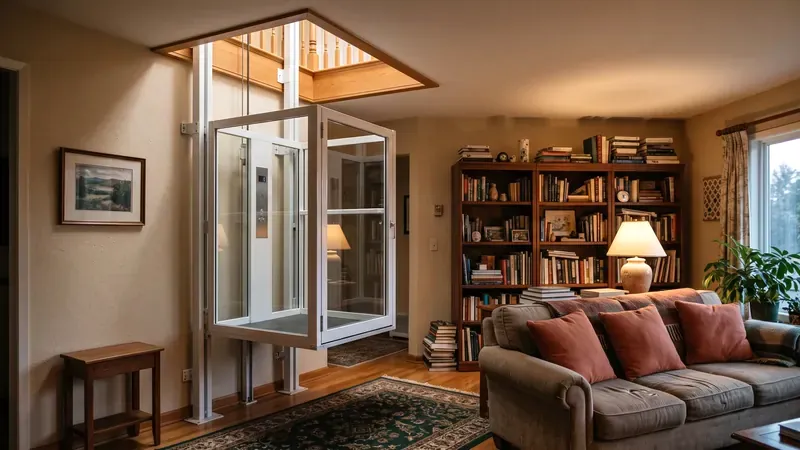 Shaftless home elevator | $23,000–$43,000 |
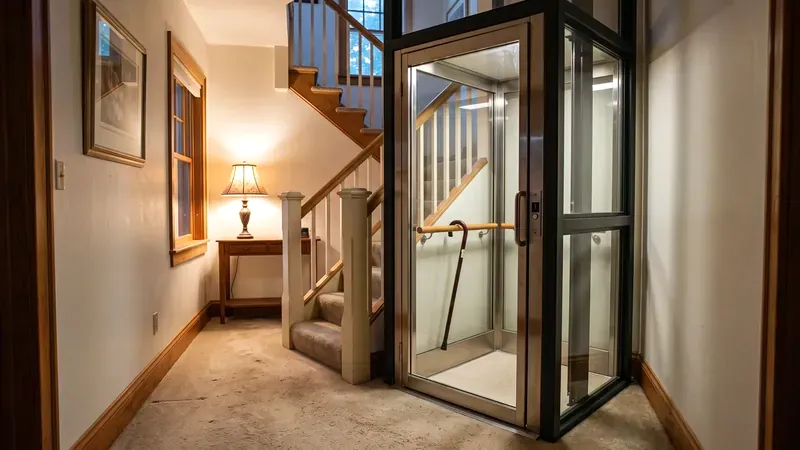 Small one person lift | $28,000–$37,000 |
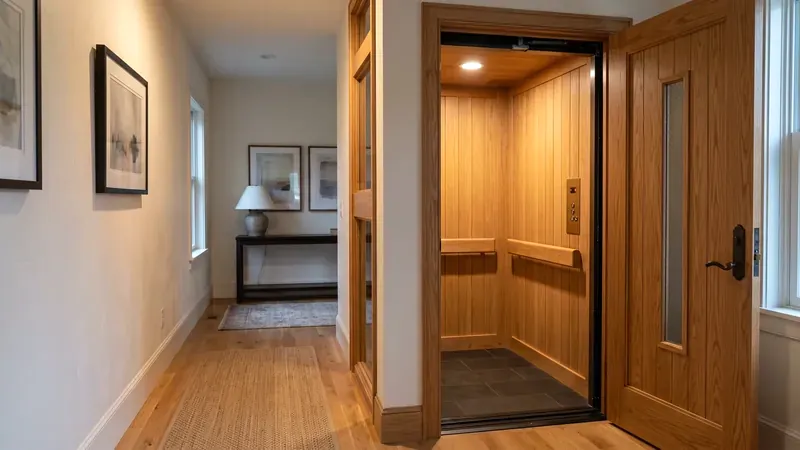 Hydraulic elevator | $28,000–$69,000 |
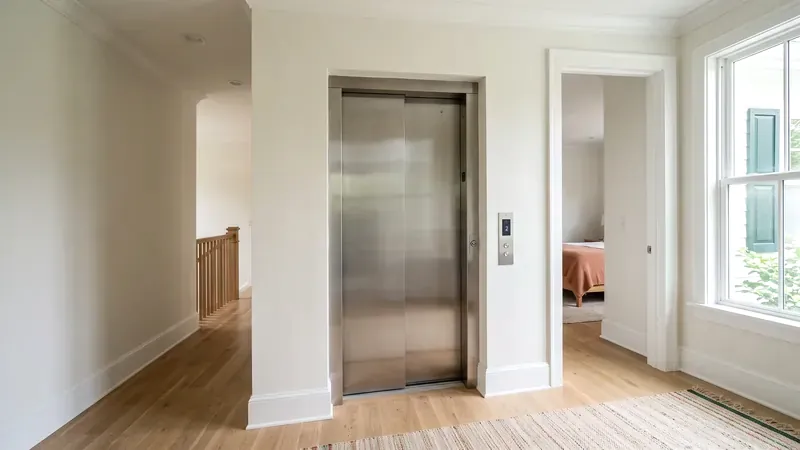 Traction or cable elevator | $31,000–$61,000 |
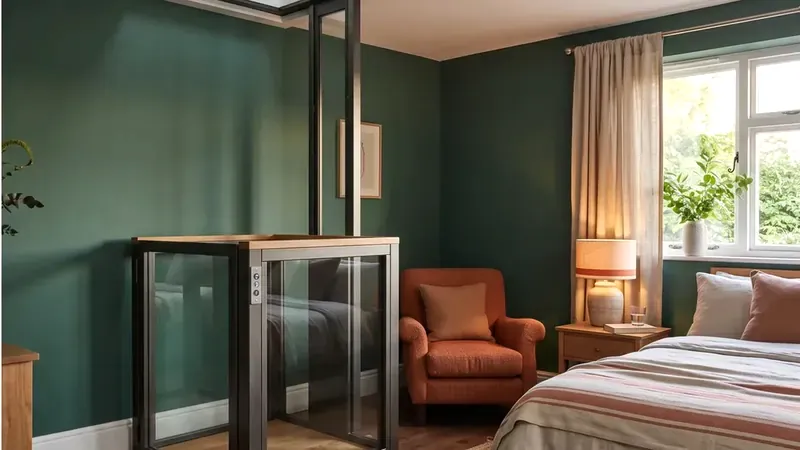 Through floor lift | $34,000–$73,000 |
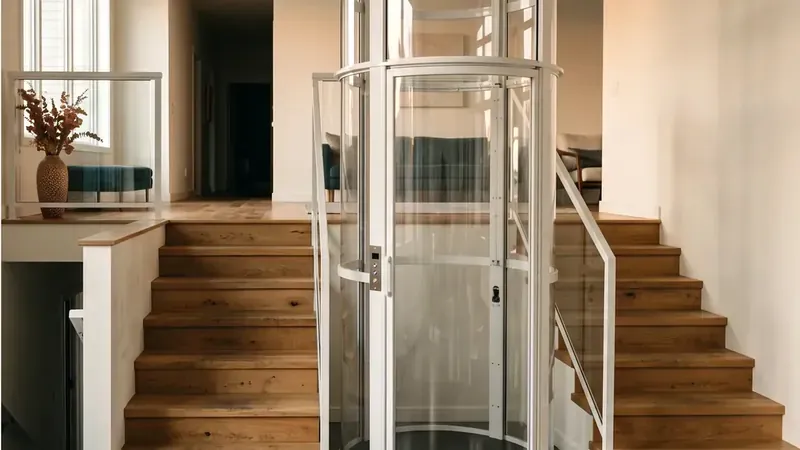 Pneumatic vacuum elevator | $40,000–$73,000 |
Installed for two floors. Also priced: a platform lift (an open platform, not an enclosed elevator) $5,000–$20,000, and a glass elevator $50,000–$100,000. Yearly service: $300–$760 (Angi).
Rules and Installer Pay in Hawaii
- Licensed installer for home work
- Yes: licensed elevator mechanic
- Electrician pay
- $46.38 an hour (US $30.38)
- State permits or inspections
- not required for a lift inside a private home
- Who installs it?
- A licensed elevator mechanic
- State help to pay in Hawaii
- Low-cost loan, Medicaid waiver, property tax break
Rules set by the Hawaii Department of Labor and Industrial Relations.
The typical price is the middle of 51 published US prices for two floors (HomeGuide alone quotes $30,000 to $60,000). How the figures are built.
For home elevator cost in Hawaii, published national estimates put a typical installed lift at $30,000 to $50,000, and simpler lifts can cost well under that. Labor costs more in Hawaii than the US average, so your price may land toward the top of that range. What you end up paying hinges on the lift you pick, how many floors it serves, and whether your house will need a shaft built for it. Call us today to ask for a written price for your home, so you know what to plan for.
Typical Installed Prices by Type of Lift
Here are typical installed prices for each kind of lift, based on national figures, so Hawaii quotes may run higher:
- A platform lift usually runs about $5,000 to $20,000 installed.
- A shaftless model tends to come in around $20,000 to $35,000.
- A small elevator generally costs $25,000 to $30,000.
- A traction elevator typically lands between $27,000 and $50,000.
- A hydraulic one usually falls in the $25,000 to $56,500 range.
- A throughfloor lift commonly costs $30,000 to $60,000.
- A pneumatic elevator generally sits at $35,000 to $60,000.
- A glass elevator is the priciest, usually $50,000 to $100,000.
Nationally, a two-story installation costs $30,000 to $60,000, per HomeGuide. Each extra floor adds $9,000 to $15,000. The only way to get your real number is a written quote after someone sees your house.
What Adds to the Price?
If your house has no shaft, putting one in costs another $5,000 to $25,000, per Willow Home. The shaft is simply the enclosed column the elevator travels up and down inside.
Labor is the other big piece. The typical electrician in Hawaii is paid $46.38 an hour, versus $30.38 across the US. Carpenters doing the framing for a shaft or a hole in the floor get $41.00 an hour in Hawaii. Both hourly rates are medians from the Bureau of Labor Statistics.
Permits and Inspections for a Home Lift
Under Hawaii's state elevator rules, lifts inside private residences are exempt, provided the public and other building occupants cannot use them. That rule is in Hawaii Administrative Rules 12-229. So a lift in a private home skips the state installation permit, the operating permit, and the scheduled inspections.
Instead, the county building permit process is what applies. In Honolulu that means the Department of Planning and Permitting. We could not find county fees aimed at elevators.
The exemption is narrow, though. If other occupants of a duplex or condo can use the lift, the state permitting and inspection rules kick back in. Then the owner must use a licensed elevator contractor, and the state checks the lift and grants a permit to operate.
For a private home, county building code standards govern how the unit goes in. In 2026 the state also proposed dropping the testing requirement for limited-use, limited-application (LULA) elevators.
Who Can Install a Home Elevator?
Even in a private home, Hawaii requires a licensed elevator mechanic. The licensing law, HRS chapter 448H, applies to work on any elevator or lift and makes no exception for private residences. The licence also covers the structural work that goes with finishing the job.
Ask to see your installer's Hawaii elevator mechanic licence before any work starts.
How to Cover the Cost of a Home Elevator in Hawaii
If you need the lift because of a disability, a loan or Medicaid waiver may help with accessibility costs, and eligible Honolulu homeowners may get a property tax exemption, though it does not pay for the lift:
- Low-interest loan: Hawaii residents with a documented disability can borrow through the ATRC Alternative Financing Program. Loans can pay for wheelchair lifts and home modifications, among other things.
- Medicaid waiver: Home accessibility work can be covered under the Med-QUEST waiver that serves people with intellectual and developmental disabilities. The caps went up with market prices, but no official page we found lists today's dollar limit.
- Property tax exemption: Homeowners in Honolulu who are totally disabled, blind, or deaf may qualify for an extra $25,000 real property tax exemption that stacks on top of the standard home exemption, which lowers the taxable value of the home rather than the tax bill by $25,000.
A Written Quote for Your Home
Every house is different, so the only number that really counts is the one for yours. Call us today. We'll look at your home, talk through the lift that fits, and give you a written price so you can plan with confidence.
Sources: middle of published US price ranges, Hawaii elevator rule (Hawaii Department of Labor and Industrial Relations), BLS wage figures for Hawaii, ATRC Alternative Financing Program, Med-QUEST / DOH-DDD 1915(c) I/DD Waiver, City and County of Honolulu exemption for persons totally disabled or with impaired sight or hearing.
Talk to a Lift Installer Near You
One call gets you a local home elevator dealer who can measure your house and put a written price on it.